
Being struck by a vehicle can leave you with devastating injuries, mounting medical bills, and a claims process that feels stacked against you from the very first call from an insurance adjuster. You have to figure out who’s at fault, calculate what’s fair, and untangle traffic and liability laws — while you’re still healing. This guide breaks down exactly what to expect after a crash and why partnering with an experienced pedestrian accident lawyer can mean the difference between a lowball settlement and the full compensation you deserve. At Weiner Mazzei, we built this resource to help you understand your rights and take confident, informed action in 2026 and beyond.
What to Do Immediately After Being Hit by a Vehicle
Calling 911 and Getting Medical Attention
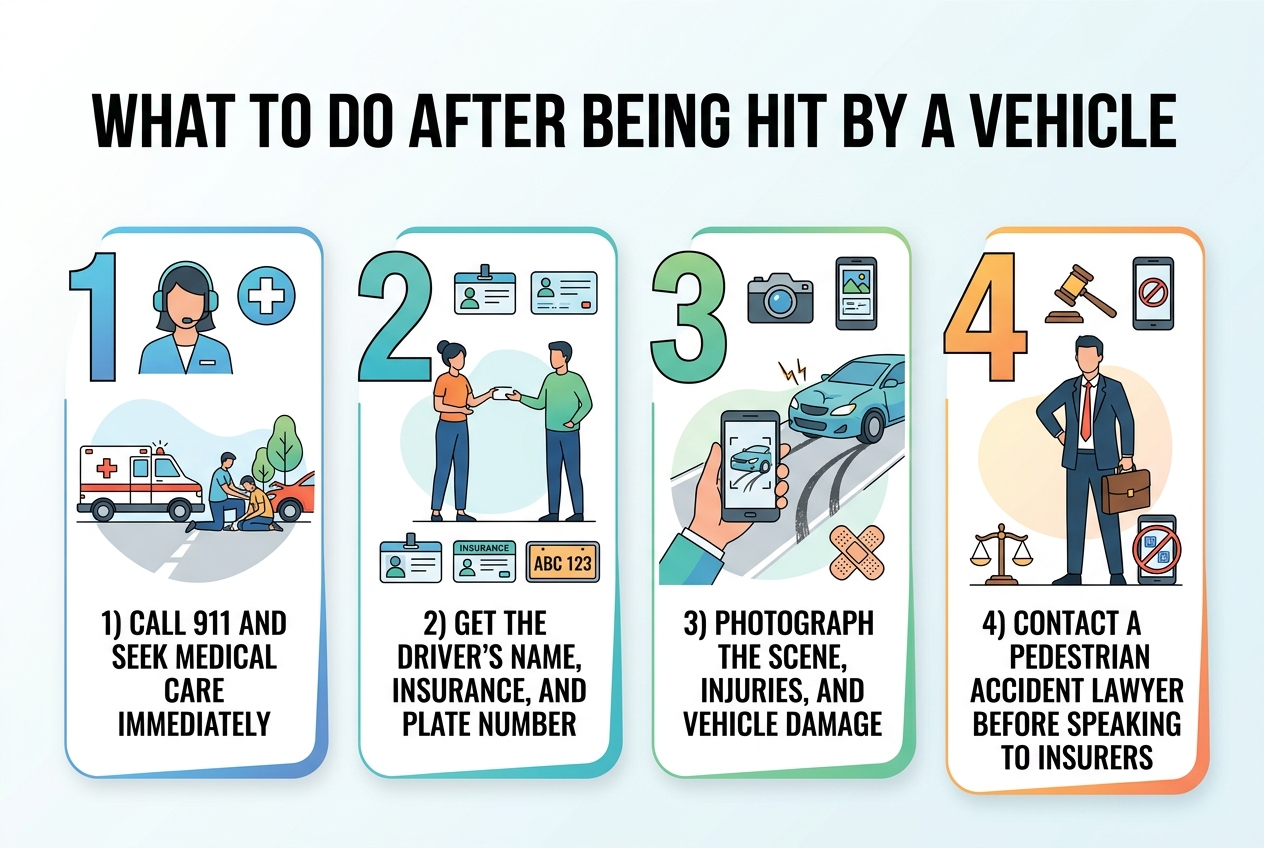
Your health comes first. Call 911 right away, even if your injuries seem minor. Adrenaline hides pain fast, and some injuries — internal bleeding, concussions — don’t show symptoms for hours. Paramedics can check you on the scene and create a medical record that links your injuries to the crash. That record becomes critical evidence later. Refuse treatment or wait a few days to see a doctor, and insurance companies will use it against you, claiming your injuries weren’t serious or weren’t caused by the accident at all.
Gathering Evidence and Witness Information
Scenes change fast. Skid marks fade. Witnesses leave. Vehicles get repaired. If you’re able, collect proof before it disappears.
- Take photos of the vehicle, the driver’s license plate, and any visible road hazards or poor lighting conditions.
- Photograph your visible injuries, torn clothing, and the exact spot where you were struck.
- Ask nearby witnesses for their names and phone numbers before they walk away.
- Note the time, weather, and traffic signal status if applicable.
- Request the responding officer’s name and badge number for the police report.
Mistakes That Can Weaken Your Case Early On
What you say and do right after the crash matters a lot. Don’t apologize. Don’t guess about fault — either can be used against you. Skip the social media posts, and don’t take a quick settlement before you know the full extent of your injuries. If a commercial vehicle was involved, questions like can I sue for being hit by a semi truck deserve careful legal review. Talking to the best attorney for car accidents new jersey offers early protects your rights from day one.
How Pedestrian Accidents Happen and Why They’re Different
Common Causes of Vehicle vs. Pedestrian Collisions
Most pedestrian crashes happen in ordinary places. A driver backs out of a parking spot without checking mirrors. A car turns right on red without looking for someone in the crosswalk. These moments feel routine — until someone gets hurt. Unlike the 5 most common types of car accidents, pedestrian crashes almost always involve a person absorbing the full force of impact with no metal frame to protect them.
Speeding remains a top factor. The risk of killing a pedestrian climbs steeply with speed: AAA Foundation for Traffic Safety research put it at about 10% at an impact speed of 23 mph and about 50% at 42 mph. Distraction is another big cause — texting, GPS use, eating behind the wheel — all pull attention away for critical seconds. Failure to yield rounds out the list, especially at unmarked intersections where drivers assume they have the right of way.
Crosswalks, Intersections, and Visibility Issues
Crosswalks should be safe zones. Many collisions happen exactly there anyway. Poor lighting, faded paint, and blocked sightlines make it hard for drivers to spot someone stepping off the curb. That’s why nighttime hours see a sharp spike in fatal pedestrian crashes.
Parking lots create their own hazards. Low speeds trick drivers into thinking they can react quickly, but blind spots around SUVs and trucks often hide small children or slower-moving adults until it’s too late.
Why Insurers Fight Harder in These Claims
Pedestrian cases carry higher stakes for insurers, since injuries tend to be more severe and costs run higher. Adjusters often argue the walker shares blame, even when the evidence says otherwise. This makes early legal guidance valuable. Reviewing 10 things to consider when choosing a personal injury attorney in New Jersey can help victims prepare. Understanding these tactics early protects your claim’s value.
Injuries and Statistics Every Victim Should Know
Recent Pedestrian Accident Statistics
Pedestrian deaths have climbed sharply across the country over the past decade. New Jersey consistently reports higher-than-average pedestrian fatality rates compared to many other states. Urban intersections, poorly lit roads, and distracted driving all feed this trend. Understanding these numbers helps victims see they’re not alone — these crashes are a widespread public safety problem, not rare freak accidents.
Most Common Serious Injuries
Pedestrians have no metal frame or airbags to absorb impact. That lack of protection leads to severe harm, even in lower-speed crashes.
- Traumatic brain injuries caused by the head striking the vehicle or pavement during impact.
- Spinal cord damage that can result in partial or full paralysis affecting daily movement.
- Multiple fractures to legs, hips, and pelvis from direct vehicle contact.
- Internal organ damage from the force of collision or being thrown onto hard surfaces.
- Severe road rash and deep lacerations requiring surgery and long recovery time.
Long-Term and Catastrophic Consequences
Many injuries create effects that outlast the hospital stay by years. Victims may need ongoing rehabilitation, mobility equipment, or in-home care indefinitely. Families often face lost wages while learning how long does a car accident settlement take before compensation finally arrives. Emotional trauma, including anxiety around traffic, frequently follows survivors long after the physical wounds close. If you’re unsure where to start, Are You Looking for a Pedestrian Accident Lawyer in NYC? resources can offer helpful early guidance.
Finding the Right Pedestrian Accident Lawyer for Your Case
Choosing the right attorney shapes the outcome of your claim. Experience, track record, and local knowledge matter more than a flashy ad. Insurance adjusters treat cases differently when they know a lawyer prepares for trial and knows the local courts.
Questions to Ask Before Hiring an Attorney
Ask direct questions before you sign anything. How many pedestrian cases has this attorney handled, and what results did they get? Who will actually manage your file day to day? These answers tell you whether you’re getting real attention or getting handed off to a junior staffer. This applies whether you’re evaluating a local firm or researching a Pedestrian Accident Lawyer in Los Angeles | No Win No Fee from out of state.
How Contingency Fees Work
Contingency fee arrangements remove upfront cost barriers. You pay nothing unless the lawyer wins your case. The table below breaks down how this typically works.
| Stage | What Happens | Cost to You |
|---|---|---|
| Initial consultation | Case review and evaluation | Free |
| Investigation | Evidence gathering, expert review | $0 upfront |
| Negotiation | Settlement talks with insurer | $0 upfront |
| Case resolved | Settlement or verdict paid | Agreed percentage, capped in New Jersey on a sliding scale that starts at 33⅓% of the first $750,000 |
What Sets a Strong Legal Team Apart
Personalized attention versus large settlement mills makes a real difference. Some firms process cases in bulk, pushing out quick, low settlements. A dedicated provider takes the time to understand your injuries and losses. The same standard applies broadly — much like knowing why you need a truck accident lawyer for complex commercial vehicle claims.
Who Can Be Held Liable for Your Injuries
Negligent Drivers and Distracted Motorists
Most pedestrian claims start with the driver. Speeding, running a red light, failing to yield at a crosswalk — these are the usual culprits. Texting behind the wheel remains one of the biggest dangers on New Jersey roads today.
Drivers who are drunk, drowsy, or simply not paying attention can be held financially responsible for medical bills, lost wages, and pain and suffering. Insurance companies often try to shift blame onto the victim, so understanding what are common mistakes that can ruin your personal injury case matters early on.
Property Owners, Employers, and Government Agencies
Drivers aren’t the only possible defendants. A property owner may share blame if broken lighting or overgrown bushes hid a crosswalk from view. Employers can also be liable when an employee causes a crash while driving for work.
Government entities may share fault for poor road design, missing signage, faded crosswalk paint, or broken traffic signals. Cities and counties have a duty to keep streets safe for pedestrians.
When Multiple Parties Share Fault
Multiple parties can be liable at once in a single accident. A distracted driver, a negligent employer, and a municipality with a poorly designed intersection might all bear responsibility for the same crash.
Sorting out these overlapping duties takes careful investigation. A resource like Pedestrian Accident Lawyer | Free Consultation | 24/7 can help victims understand how shared liability affects their recovery.
Proving Fault and Overcoming Comparative Negligence
Building Evidence: Video, Witnesses, and Police Reports
Strong cases start with solid evidence gathered fast. Traffic camera footage, dashcam clips, and nearby business surveillance often vanish within days or weeks. Act quickly to request this footage — it can make or break a claim.
Witness statements add another layer of proof. Someone who saw the driver run a red light or speed through a crosswalk can confirm what happened. Police reports carry weight too, since officers document skid marks, vehicle damage, and citations issued at the scene.
Medical records tie injuries directly to the crash. Combined with photos of the scene, this evidence paints a clear picture for insurers and courts. Understanding new jersey no fault laws also helps victims know what documentation they’ll need early on.
Understanding Comparative Negligence Rules
New Jersey follows a modified comparative negligence rule. If a pedestrian is found more than 50% at fault, they can’t recover anything. Below that line, damages get reduced by the assigned percentage.
For example, a $100,000 claim reduced by 20% fault results in $80,000. Insurers often push these percentages higher to shrink payouts, which is exactly why accurate evidence matters so much.
Fighting Back Against Blame-Shifting Tactics
Insurance adjusters often argue pedestrians were distracted, jaywalking, or wearing dark clothing at night. These claims can unfairly inflate the fault percentage assigned to you.
Countering this takes detailed evidence, expert testimony, and sometimes accident reconstruction. Firms like a Charlotte Pedestrian Accident Lawyer often point out how thorough investigation stops unfair blame from cutting into rightful compensation.

Compensation You May Be Entitled to Recover
Medical Bills, Lost Wages, and Future Care Costs
Economic damages cover real financial losses: hospital bills, surgery costs, physical therapy, lost wages from missed work. Some pedestrian injuries require years of ongoing care, like prosthetics or home health aides. If you lack health insurance, many providers will treat you now and wait for payment until your claim settles. This differs from typical car accident claims, since pedestrians often face more severe, longer-lasting injuries.
Pain, Suffering, and Emotional Damages
Non-economic damages compensate for harm that has no receipt. Pain, anxiety, sleep loss, reduced quality of life — all of it counts. A skilled attorney, such as a Scottsdale Pedestrian Accident Lawyer, can help put a fair number on these losses.
| Damage Type | Example | Who Calculates It |
|---|---|---|
| Medical Expenses | ER visits, surgery, rehab | Medical billing records |
| Lost Wages | Missed paychecks, reduced hours | Employer pay stubs |
| Future Care | Long-term therapy, equipment | Medical experts |
| Pain and Suffering | Chronic pain, trauma | Attorney and jury |
| Wrongful Death | Funeral costs, lost support | Court or settlement formula |
Wrongful Death Compensation for Families
When a pedestrian dies, the family may be able to bring a wrongful death claim. This can recover funeral costs, lost income, and the financial value of lost companionship and care. In New Jersey, the claim is brought by the administrator or executor of the estate on behalf of the family members entitled to recover.
Filing Deadlines and the Legal Process Timeline
Statute of Limitations for Pedestrian Claims
Every state sets a statute of limitations for pedestrian injury claims. New Jersey generally allows two years from the accident date. Claims against government entities — a city bus, a county road defect — often require notice within just 90 days. Miss these windows, and your case can end before it starts. Avoiding common mistakes that can ruin your personal injury case starts with knowing your exact deadline early.
Stages of a Pedestrian Accident Lawsuit
Most claims follow a predictable path. Knowing each stage helps you set realistic expectations for timing and next steps.
| Stage | What Happens | Typical Timeframe |
|---|---|---|
| Investigation | Gathering evidence, medical records, witness statements | 1-3 months |
| Demand Letter | Sending claim to insurer with damages summary | 1 month |
| Negotiation | Back-and-forth settlement discussions | 2-6 months |
| Filing Suit | Formal complaint filed if talks stall | Varies |
| Trial | Case presented before judge or jury | 1-2 years from filing |
What Affects How Long a Case Takes
Several factors speed things up or slow them down. Clear liability and full medical recovery often mean faster settlements. Disputed fault, severe injuries, or multiple defendants add time to the process. Firms like Sacramento Pedestrian Accident Lawyers … note that insurer cooperation plays a major role in timing too.
Special Situations That Complicate a Claim
Dealing With an Uninsured Motorist
New Jersey requires drivers to carry insurance, but not everyone follows the law. When the at-fault driver has no coverage, or too little, your own policy may fill the gap. Uninsured motorist (UM) coverage and underinsured motorist (UIM) coverage can pay for medical bills, lost wages, and pain and suffering when the driver can’t.
Filing a UM or UIM claim works differently than a standard case. Strict deadlines apply, and insurers often push back hard. Understanding how to file a personal injury claim in New Jersey helps victims avoid missed steps that could cost them thousands.
Support for Non-English Speakers
Language barriers should never block access to justice. Many law offices provide interpreters during consultations, medical appointments, and depositions. Courts also offer certified interpreters for hearings and trials, free of charge to the injured party.
Documents like medical records and insurance letters can be translated for clarity. A Pedestrian Injury Attorney familiar with these accommodations can guide non-English speakers through each step, so nothing gets lost in translation during a critical case.
Can Undocumented Immigrants File a Claim?
Yes. Immigration status doesn’t affect the right to file a personal injury claim. New Jersey courts allow undocumented individuals to seek compensation for medical costs, lost income, and pain and suffering after being struck by a vehicle.
Some victims worry that pursuing a claim could create legal exposure. In most cases, civil injury proceedings stay separate from immigration matters, letting victims pursue the money they need to heal.
Protecting Your Claim While You Recover
Attending All Medical and Therapy Appointments
Consistent treatment does more than heal your body. It builds a paper trail insurers can’t easily dispute. Every visit, scan, and therapy session becomes proof of how badly you were hurt. Gaps in treatment give insurers an excuse to argue your injuries were minor, or unrelated to the crash altogether.
Why You Shouldn’t Speak to the Insurance Company Alone
Adjusters often call soon after the crash, sounding friendly and helpful. Their real goal is to limit what they pay you. Understanding how do injury lawsuits work in nj can help you see why early statements matter so much. Before you say anything else, keep these points in mind:
- Recorded statements can be used later to twist your words against you.
- Quick settlement offers rarely cover future medical costs or long-term therapy.
- Adjusters may ask leading questions designed to shift blame onto you.
- Signing forms without review could waive rights you didn’t know you had.
- Vague answers about pain levels can hurt your credibility down the road.
Recovering Lost Wages While Unable to Work
Missing paychecks adds stress to an already painful recovery. Track every missed shift, reduced hour, and lost bonus. Pay stubs, employer letters, and doctor notes documenting your inability to work all support your claim for lost income.
Before you settle on a path forward, it helps to be clear about what kind of claim you actually have and who is equipped to handle it — a claim against a doctor or hospital follows very different rules and timelines than one arising from a crash, a workplace injury, or a hazard on someone else’s property, and those distinctions shape everything from the evidence you’ll need to the deadline you’re working against. Ask how your injury occurred, who had a duty to keep you safe, and whether the harm traces back to negligent medical care or to an accident that a personal injury, premises liability, or workers’ compensation practice would be better suited to pursue. Getting that question answered early, even in a short conversation, tends to save far more time and worry than guessing at it alone.