
After a serious crash, a fall on someone else’s property, or an injury on the job, you need more than a name off a billboard. You need to know what actually separates the best personal injury lawyers in New Jersey from the rest of the pack, especially with 2026’s evolving legal landscape in play. The stakes are high. This article breaks down seven qualities that matter most when your recovery, your finances, and your future are on the line.
How to Identify the Best Personal Injury Lawyers for Your Case
Why Experience and Track Record Matter Most
Typing “personal injury lawyer near me” into a search bar gets you a hundred names. It doesn’t tell you how to tell them apart. That’s the real problem most people face. You need a short list of criteria, not just a long list of ads, before you pick up the phone.
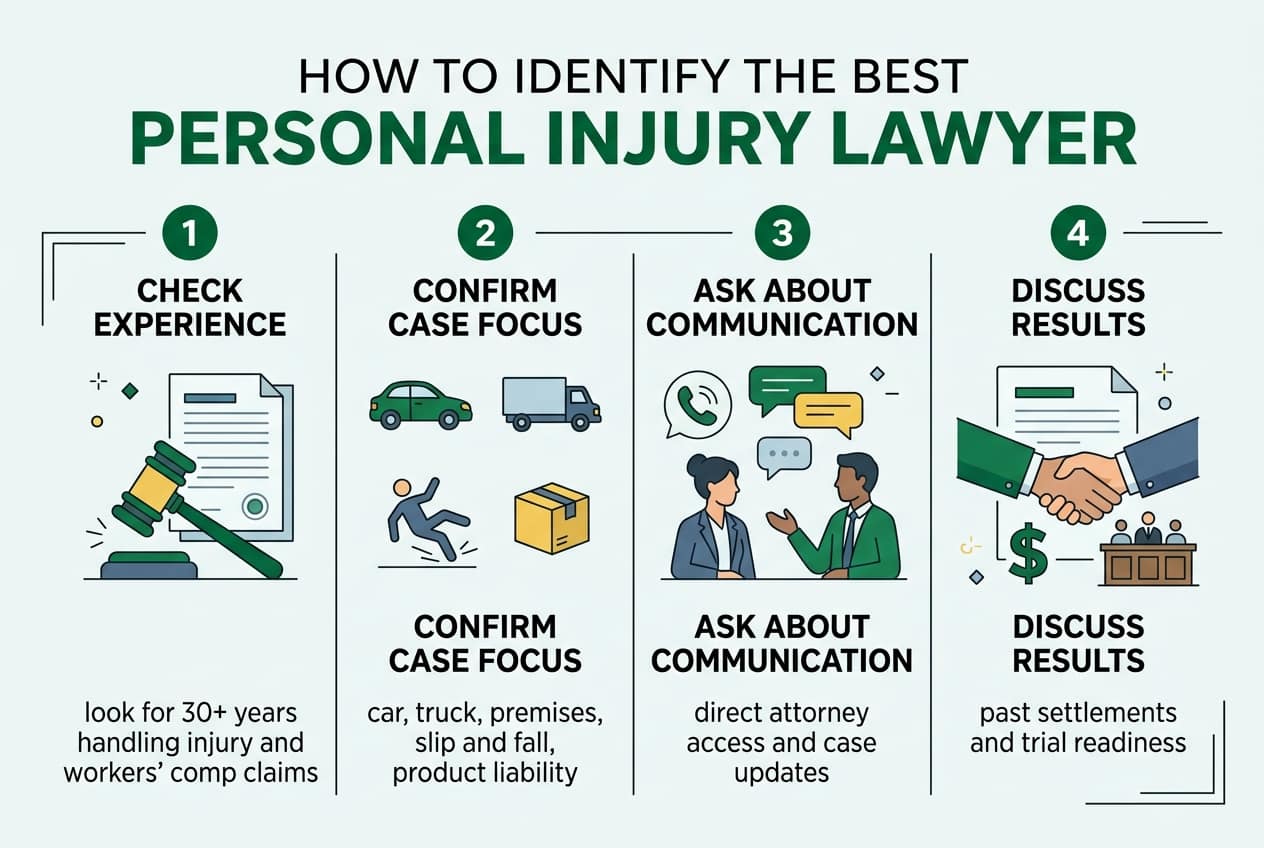
Years in practice matter. But so does what those years were actually spent doing. A lawyer who’s spent decades in courtrooms, negotiating with insurers, and building real case files knows things a newer practice simply hasn’t learned yet. If you’re weighing options after a crash, reading up on what makes a strong attorney for car accident cases in New Jersey can sharpen the questions you ask. Credentials on a website are easy to write. A verifiable trial history, named attorneys, and plain answers about how cases actually get resolved are harder to fake.
Communication style counts for more than people expect. Some firms hand you off to a case manager and you never hear from your actual lawyer again. Others keep you looped in on every medical update and settlement offer. Ask how you’ll be kept informed before you sign anything. It tells you more than any billboard ever will.
Questions to Ask Before Hiring
Start with the basics, then push further. Who will actually handle my case, day to day? How many cases like mine have you tried or settled? What’s your process for calculating what my claim is actually worth, rather than guessing at a number early on? A firm that consults medical experts and economists to document damages is operating very differently from one that eyeballs a settlement figure in the first meeting.
Ask about background, too. A lawyer who’s worked the defense side, or inside an insurance claims department, understands the tactics used to minimize payouts from the inside. That’s worth asking directly. A confident attorney will answer without hesitation. If a case stalls, drags on, or gets dismissed before trial, you’ll also want to know whether it can be revisited at all; our piece on whether you can reopen a personal injury case walks through when that’s realistic.
The rest of this article breaks down seven specific qualities worth checking before you hire anyone: experience with serious injuries, insider knowledge of insurer tactics, trial record, communication habits, and more. Use it as a checklist, not just a reading list.
1. Deep Experience With Catastrophic and Complex Injury Claims
What Counts as a Catastrophic Injury
Not every injury claim is the same, and treating them that way is a mistake. A catastrophic injury is one that changes the shape of someone’s life for good — spinal cord damage, severe burns, amputations, or a brain injury that affects memory, mood, or the ability to work again. Reading up on the long term effects from a brain injury makes clear just how far-reaching these cases can get, touching everything from income to daily caregiving needs. These aren’t cases you settle quickly. They take time, patience, and a lawyer who’s actually handled them before. If the injury involves ongoing rehabilitation or specialized medical care, that treatment itself comes from medical providers; a catastrophic injury claim is built to document and recover the cost of that care, not deliver it.
Decades of case history matter here. A firm that’s spent over 30 years working injury claims across northern New Jersey has seen the full range — multi-vehicle highway wrecks, warehouse falls, defective equipment injuries — and knows how each one tends to unfold. That kind of pattern recognition is hard to fake. It’s also why experience counts for more than confidence in these cases.
Severe injuries also tend to involve more moving parts: multiple doctors, long recovery timelines, sometimes a lifetime of care. Lawyers who’ve sat across from these situations before know what documentation will matter down the road, and they tend to start collecting it earlier rather than scrambling later.
Ability to Consult Medical and Financial Experts
Here’s the thing about serious injuries: the real cost isn’t just today’s hospital bill. It’s next year’s surgery, the decade of physical therapy, the wheelchair ramp, the lost decade of earning potential. A single treating physician can’t always speak to all of that. So the strongest cases lean on outside specialists — life care planners, vocational experts, economists — who can project what a person will actually need over a lifetime, not just a few months.
This is detailed, unglamorous work. It means pulling medical records, cross-checking wage history, and sometimes bringing in a forensic accountant to model future losses. It’s slower than guessing. But guessing is exactly how injury victims end up underpaid. A well-documented claim, built on real projections rather than rough estimates, holds up far better against an insurance company’s own number crunchers.
Catastrophic Claims Require Different Valuation
A sprained wrist and a severed spinal cord don’t belong on the same scale, yet insurers sometimes try to treat them with similar formulas. That’s the quiet danger in catastrophic cases — undervaluation. Minor injury claims often get resolved with standard calculations tied to medical bills and a bit of time off work. Catastrophic claims need a completely different lens, one that accounts for home modifications, lost future earnings, and ongoing care that could stretch for decades.
Valuing that correctly takes judgment, not a formula from a spreadsheet. It also helps to understand things to consider when choosing a personal injury attorney before signing with anyone, especially for a case this serious. Short version: ask about their track record with severe injuries specifically, not just injury cases in general. Other firms worth knowing about in this space include Morgan & Morgan-style national chains and regional New Jersey injury practices, though their approach to catastrophic claims varies widely. The difference between an adequate settlement and a fair one often comes down to who built the stronger case file.
2. Insider Knowledge of Insurance Company Tactics
Insurance adjusters have a playbook. They know how to stall, how to ask questions that trap you into admitting fault, and how to dangle a quick check before your medical bills are even finalized. An attorney who once sat on the defense side has seen that playbook written. They know which phrases trigger a denial, which documentation gaps get exploited, and why that first settlement offer almost always lands far below what a claim is actually worth. That’s not theory. It’s pattern recognition built over years of handling claims from the other chair.
This matters most in the weeks right after a crash or fall, when insurers move fast hoping you won’t have representation yet. Lowball offers aren’t random; they’re calculated against what the adjuster thinks you’ll accept out of fear or financial pressure. Attorneys with claims-side backgrounds can read a delay tactic for what it is and respond before it costs you leverage. If you’re building your own record in the meantime, reviewing guidance on car accident claims can help you understand what documentation actually strengthens a case versus what adjusters tend to dismiss.
A former insurance claims director brings something harder to replicate: direct knowledge of internal reserve calculations, settlement authority limits, and how denial letters get drafted to discourage appeals. That’s a different kind of leverage at the negotiating table. Plenty of firms advertise “aggressive” representation. Fewer can say they’ve actually run the numbers from inside the carrier’s office. When you’re comparing lawyers, ask plainly whether anyone on the team has worked claims or defense. The answer tells you more than any ad ever will.
3. A Track Record Across Vehicle, Truck, and Premises Cases
Not every injury case runs the same playbook. A car crash, a jackknifed tractor-trailer, and a wet grocery store floor all lead to compensation, sure, but the evidence, the deadlines, and the parties you’re up against look nothing alike. A good lawyer treats each one differently from day one.
Case Types and What They Typically Require
Here’s a rough breakdown of what separates these claims in practice. Knowing the differences helps you understand why your lawyer asks for certain documents, or why one case moves faster than another.
| Case Type | Key Evidence Needed | Typical Liable Party | Notable Deadline Factor |
|---|---|---|---|
| Car accident | Police report, photos, witness statements | Other driver, sometimes a third party | NJ’s statute of limitations window |
| Truck accident | Driver logs, black box data, cargo records | Driver, trucking company, sometimes a manufacturer | Federal trucking regulations complicate fault |
| Slip and fall | Maintenance logs, surveillance footage, incident reports | Property owner or manager | Evidence often disappears within days |
| Product liability | Product itself, purchase records, defect history | Manufacturer, distributor, or retailer | Product must be preserved as evidence |
Truck cases alone can involve federal trucking rules most car accident claims never touch, which is one reason learning what to do after a semi truck accident matters before evidence disappears. Slip and falls live or die on how fast someone documents the scene; surveillance footage at many local businesses gets overwritten within a week or two. And product liability cases require the actual defective item preserved, not just photos of it. Note that product liability here means one-on-one representation for a single defective product injury, not a mass tort or class action drug and device case — those run through a different kind of litigation entirely. If you’ve been hurt by an impaired driver, your path forward is a civil claim against that driver, handled through motor vehicle accident representation, not a criminal defense matter. One thing worth noting: motorcycle accidents and dog bites aren’t always listed separately on a firm’s site, even when premises liability or motor vehicle work covers similar ground. Don’t assume; call and ask. A quick conversation at 973-471-2300 will tell you whether a specific case type is handled before you commit to anything.
4. Workers’ Compensation Experience for On-the-Job Injuries
A strong firm treats workers’ comp as its own lane. It’s not the same thing as a personal injury lawsuit, even though both deal with injuries. Comp claims run through a state system with its own rules, deadlines, and benefit schedules — medical coverage, temporary disability, permanent partial or total disability awards. A car accident claim, by contrast, is a civil case against another driver’s insurance. Mixing the two up is a common mistake, and it can cost you benefits you’re actually owed.
Here’s where people get tripped up: workers’ comp benefits are a state program, not federal Social Security Disability. If you’re hurt on the job and can’t go back to work, workers’ compensation is the piece a personal injury firm would pursue for you. SSDI is a separate federal application with its own medical standards and waiting periods, and it’s handled by different attorneys entirely. A firm that pursues your comp claim should be upfront that it isn’t an SSDI shop. Note also that pre-existing conditions can complicate either path, and understanding how prior health issues affect a claim helps set realistic expectations before you file anything.
So ask directly: which benefits does this firm actually pursue? Wage replacement, medical bills, permanent disability payouts — or just one of those? Some outfits dabble in comp as a side offering. Others build real practice around it. If you’re also dealing with workplace discrimination or a termination dispute, that’s a different specialty altogether, handled by employment lawyers rather than a workers’ comp practice. Get clarity before you sign anything.
5. Transparent, Consistent Client Communication
Ask around and you’ll hear the same complaint: the lawyer who was all smiles at the signing meeting vanishes the moment the case gets real. Calls go unanswered. Months pass with no word on where things stand. That silence is more than annoying — it’s a warning sign about how your case is being handled. Serious soft-tissue injuries, for instance, can change over time, which is one reason learning the symptoms of whiplash after a car accident matters even weeks after a crash. A firm that’s paying attention will flag that kind of development without being asked.
Strong communication isn’t a nice extra. It’s a sign the firm is actually working the file. Here’s what that should look like in practice:
- You get a status update whenever there’s a meaningful development in your medical treatment or legal filings, not just when a settlement offer finally appears.
- Your calls and emails get returned within a day or two, not a week, because a silent phone usually means a stalled case.
- You can reach a real person at a stable, physical office address rather than a call center or a rotating cast of case managers.
- Someone explains, in plain language, what each medical record or insurance letter actually means for your claim.
- You’re told honestly when there’s no news yet, instead of being left to guess and worry.
Direct phone access and a consistent office location matter more than people realize. A firm that’s answered the same number from the same address for decades isn’t going anywhere — and that kind of accountability is hard to fake.
6. Clear Scope: What a Personal Injury Firm Does and Doesn’t Handle
Not every bad situation calls for a personal injury lawyer. People often assume one firm can handle any legal mess, but that’s rarely true. A personal injury practice is built for injuries caused by someone else’s negligence — a crash, a fall, a defective product, an unsafe workplace. It’s not built for family court, criminal charges, or paperwork tied to your estate. Knowing the line matters before you pick up the phone.
Services Commonly Confused With Personal Injury Law
Medical malpractice, wrongful death, divorce, criminal defense, immigration, estate planning, and bankruptcy all sit outside the typical personal injury lane, even though they get lumped in constantly. Matching the right specialty to your situation saves you weeks of wasted calls. The table below sketches out where personal injury work ends and other fields pick up.
| Situation | Often Confused With | Closer Fit |
|---|---|---|
| Hospital error during surgery | Personal injury claim | Separate medical malpractice attorney |
| Family member dies in a crash | Standalone wrongful death firm | Catastrophic loss / motor vehicle claim (confirm fatality coverage directly) |
| Injured worker can’t return to any job long-term | Social Security Disability filing | State workers’ compensation claim |
| Bitten by a neighbor’s dog | Dedicated dog bite lawyer | Premises liability claim (verify with the firm first) |
| Fall injury inside a nursing facility | Nursing home abuse attorney | Premises liability / slip and fall claim (confirm abuse allegations separately) |
A few of these deserve a second look before you assume coverage. If you’re dealing with a surgical error or a missed diagnosis, that’s a matter for a separate medical malpractice attorney — a personal injury or workers’ comp claim won’t cover it, even if the underlying injury happened at work or in a crash. Fatality cases, nursing home incidents, and animal attacks sit in a gray zone too — some firms handle pieces of them, some don’t, so ask directly. If you need a will drafted or an estate sorted out after a catastrophic injury raises those questions, that’s work for a separate estate planning attorney; a catastrophic loss claim can document the injury’s financial impact, but it won’t produce those documents. Likewise, if your situation involves buying or selling property, a title dispute, or a landlord-tenant issue, you’ll need a real estate attorney — the only property-related work here is premises liability and slip and fall claims for someone hurt on another person’s property. And if an injury has left you buried in debt, a bankruptcy attorney handles that side of things; a personal injury or workers’ comp claim is aimed at recovering lost wages and medical costs, not restructuring debt. If your injury pushes toward litigation thresholds, it helps to review how New Jersey defines a serious injury before you file anything. Picking the wrong specialty doesn’t just slow things down. It can burn your filing deadline entirely.
7. Proven Process for Building a Well-Documented Compensation Case
Steps a Strong Firm Follows From Intake to Resolution
Here’s a quick gut check. A lawyer who tells you what your case is “worth” on day one is guessing. A strong case isn’t estimated, it’s built. That takes time, outside input, and real paperwork, not a number pulled out of thin air during your first phone call.
The good ones lean on specialists instead of hunches. That might mean a vocational expert, an accident reconstructionist, or a life-care planner who can put a dollar figure on future treatment. Proper medical documentation for car accident compensation cases often makes or breaks the final number, since adjusters pick apart anything that looks thin. A methodical process generally includes:
- Gathering complete medical records from every provider, not just the emergency room visit, so no treatment gap gets used against you later;
- Calculating wage loss with pay stubs, tax records, and employer statements rather than a rough guess at missed income;
- Bringing in expert testimony on liability, injury severity, or future care needs when the stakes call for it;
- Logging ongoing treatment and prognosis updates so the claim reflects where you actually stand, not where you started;
- Organizing accident scene evidence, photos, and witness statements before memories fade and details get fuzzy;
- Preparing a demand package that reads as fact-backed, not emotional, because that’s what moves insurers.
Skip these steps and you’re negotiating from a weak hand. Follow them, and settlements or verdicts tend to land a lot closer to what the case is actually worth.
Choosing how to move forward after a catastrophic injury often comes down to a few honest questions: how severe and lasting are the losses, who caused them, and what kind of documentation will be needed to show the true cost of long-term care. Outside experts are frequently brought in to help answer that last question, since the financial weight of ongoing treatment and support rarely fits into a simple estimate. Taking time to sort through these details early on tends to make the path forward clearer, whatever direction it ultimately takes.