
You trusted a nursing home to care for someone you love, and instead you found unexplained bruises, bedsores, or worse. That betrayal cuts deep. If you’re searching for an attorney for nursing home negligence in New Jersey, you’re probably exhausted, angry, and unsure where to turn next. This guide walks you through exactly what to do in 2026 to protect your family and hold the facility accountable.
Recognizing the Warning Signs of Nursing Home Negligence
Trust your gut. If something feels off during a visit, it probably is. Families often catch the first signs of trouble long before a facility ever admits a problem exists. Knowing what to look for makes all the difference.
Physical and Emotional Warning Signs
Some signs show up on the body. Others show up in how a person acts around staff. Both matter. Both deserve a closer look rather than a shrug.
- Bedsores or pressure ulcers that develop from being left in one position too long without repositioning or proper skin care;
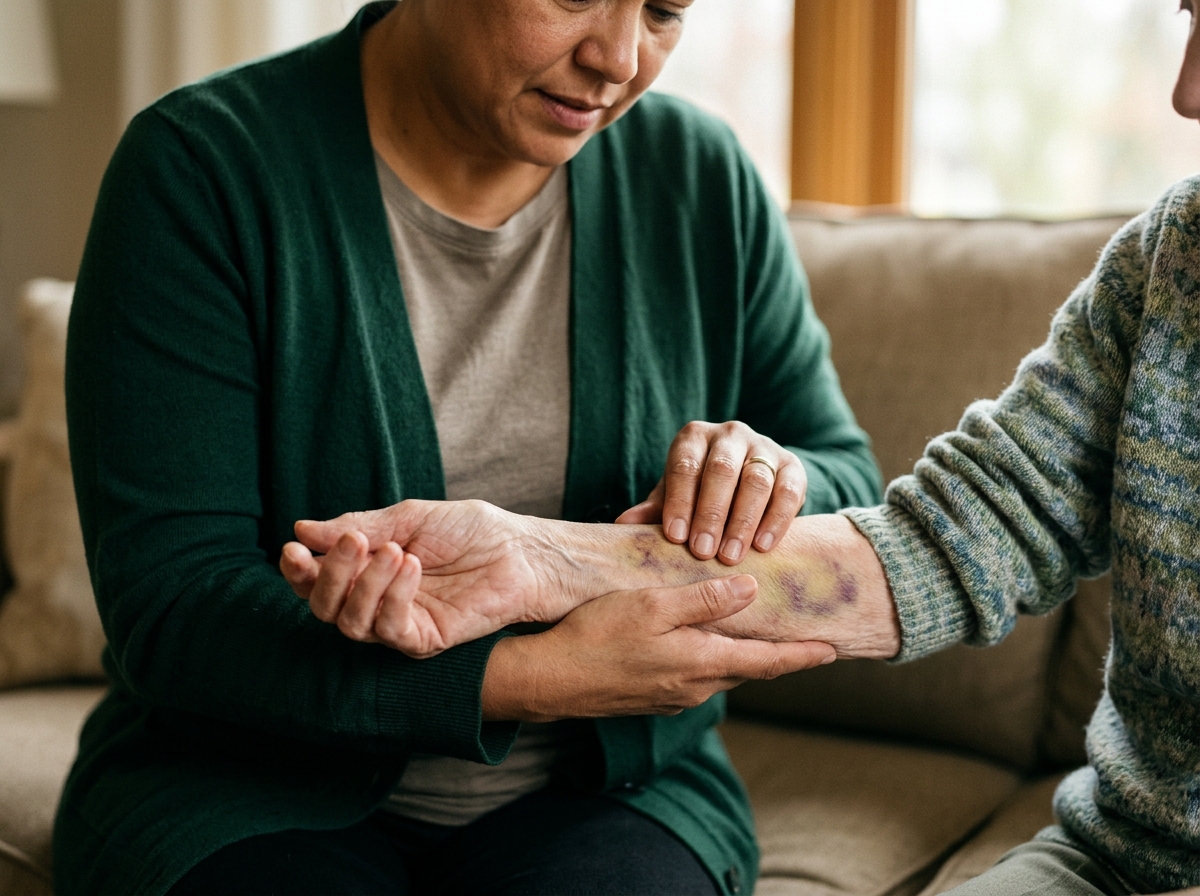
- Unexplained bruising, cuts, or fractures that don’t match the story you’re given, or that keep happening;
- Sudden weight loss, dehydration, or a gaunt appearance suggesting meals and fluids aren’t being managed properly;
- Poor hygiene, soiled clothing, or a strong odor that points to skipped bathing and toileting assistance;
- Withdrawal, flinching, or visible fear when a particular staff member enters the room;
- Sudden confusion or personality changes that may signal a medication error, overdose, or missed dose.
Facility-Level Red Flags
Sometimes the problem isn’t one caregiver. It’s the whole building. Understaffing, unsafe walkways, repeated falls, and unsanitary rooms all point to systemic failure rather than a single bad day. When you see these patterns together, it’s rarely a coincidence.
Here’s the distinction that matters most: neglect means a failure to provide basic care, food, hygiene, supervision, while abuse is intentional harm. Both are serious, but they lead to different legal questions and different evidence. This overlaps in some ways with how courts separate a catastrophic injury vs personal injury claim, since severity and intent both shape the case. A broader personal injury framework applies here too. Resources like a Chicago Nursing Home Abuse Lawyer often outline similar warning signs, since these patterns show up nationwide.
What New Jersey and Federal Law Require of Nursing Homes
New Jersey Resident Rights Law
New Jersey doesn’t leave resident protections to chance. The state’s Nursing Home Responsibilities and Rights Act spells out baseline guarantees: the right to be free from abuse, the right to privacy, the right to review your own medical records, and the right to voice a grievance without fear of retaliation. These aren’t suggestions. They’re legal obligations every licensed facility in the state must follow, whether it’s a small family-run home in Passaic or a large corporate chain.
What does this mean in practice? A facility can’t restrain a resident for staff convenience. It can’t discharge someone without proper notice. It has to provide a safe, clean environment and honor personal dignity in daily care. When a home ignores these duties and a resident suffers because of it, that failure becomes more than a policy lapse — it’s a violation with legal weight behind it.
Federal Standards Facilities Must Meet
Federal law backs up state protections through the Nursing Home Reform Act, passed under OBRA in 1987. It requires facilities receiving Medicare or Medicaid funding to deliver care that helps each resident reach their “highest practicable” physical, mental, and psychosocial well-being. That’s a real standard, not a vague goal, and it’s measured through comprehensive assessments and individualized care plans.
New Jersey’s Department of Health enforces licensing rules, staffing ratios, and regular inspections to make sure homes actually meet these standards. Surveys check everything from medication management to bedsore prevention to whether staffing levels match resident needs. This resource on nursing home negligence covers similar ground and is worth a look if you want a broader view of how these cases unfold: Nursing Home Abuse & Negligence | Maryland Elder …. When state surveys document deficiencies — understaffing, repeated falls, unexplained weight loss — those findings often become key evidence in a negligence claim, much like documentation matters in other injury cases, from mistakes that can ruin your motorcycle accident claim in… to disputes requiring the best attorney for car accidents new jersey can offer, or even property claims where How a Property Damage Attorney Can Make a Difference explains the value of thorough records.
Neglect vs. Medical Malpractice: Why the Distinction Matters
How Neglect Claims Differ from Malpractice Claims
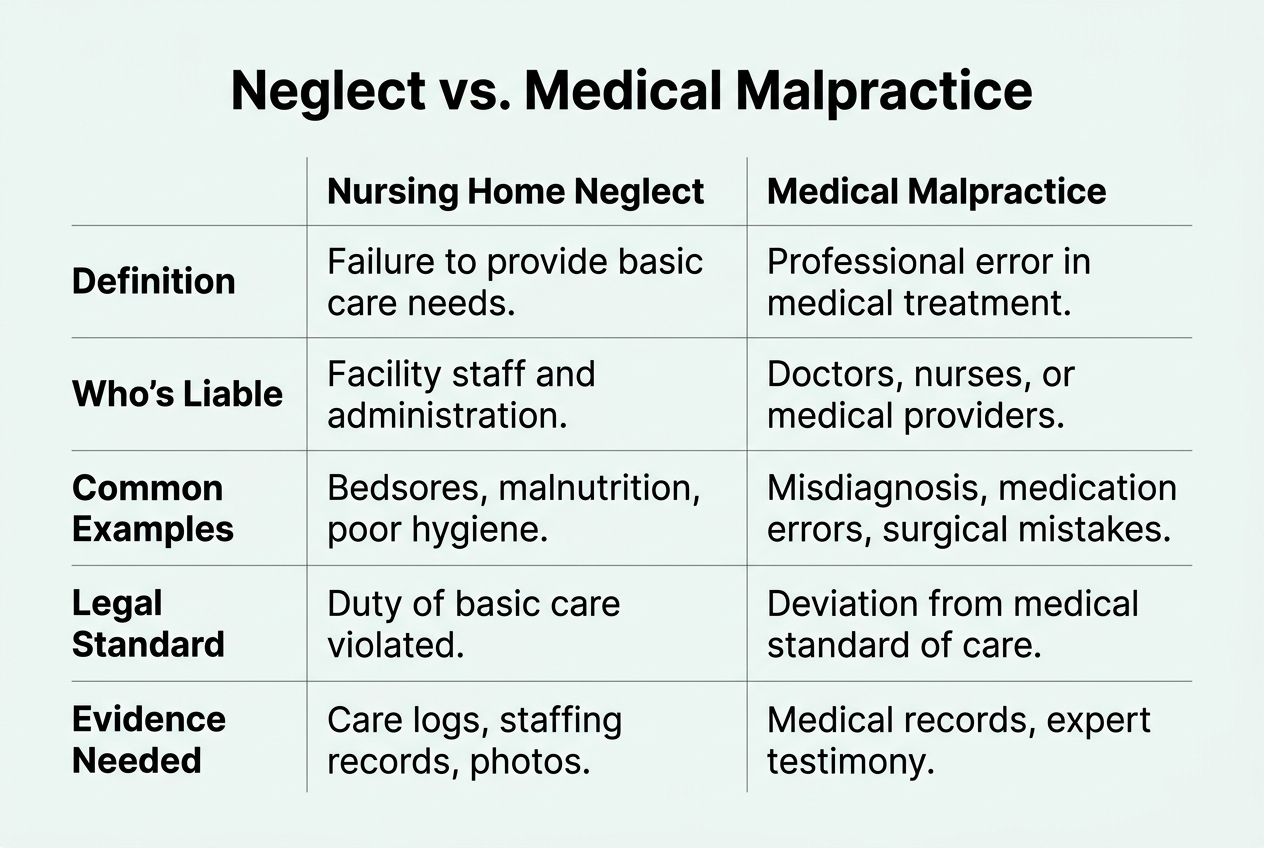
Not every bad outcome in a nursing home is the same kind of case. Neglect means the basics got skipped: meals missed, hygiene ignored, a resident left unsupervised until they fell. It’s a failure of care, not necessarily a failure of medicine. Bedsores from not being turned every two hours? That’s neglect. Dehydration because nobody checked on a confused resident all shift? Also neglect.
Medical malpractice is different. It involves a licensed clinician — a doctor, nurse, or nurse practitioner — making a treatment error. Wrong medication dose, a missed diagnosis, a botched wound care order. These require proving a professional violated a clinical standard, which is a different legal test entirely. Understanding that distinction early shapes everything that follows, including how to file a personal injury claim in NJ.
Plenty of cases involve both. A resident develops an infected bedsore (neglect) that’s then misdiagnosed by the facility’s nurse practitioner (malpractice). Untangling the two requires separate legal theories, separate experts, and sometimes separate causes of action filed together. Getting this sorted early matters — it’s worth reviewing 10 things to consider when choosing a personal injury attorney before you commit.
Classification isn’t just paperwork. It determines whether you need a certified nursing expert, a physician, or both. It shapes discovery requests, staffing records, and medication logs you’ll need pulled. Get it wrong, and you risk building a case around the wrong standard of proof. Resources like the Nursing Home Negligence Attorney Houston page illustrate how differently these claims get framed depending on jurisdiction and facts. Sorting this out early saves months.
How an Attorney for Nursing Home Negligence Builds Your Case
Evidence That Strengthens a Claim
Every solid case starts with paper. Medical records, incident reports, staffing logs, surveillance footage — these tell the story before anyone says a word in court. Staffing logs matter more than people think. A facility running with half its usual aides on a given shift is a red flag that often explains a fall or a missed medication.
Records alone don’t win cases, though. An attorney also brings in medical and care-standard experts to review the file and say plainly whether the care fell below what’s required, rather than guessing at what damages might look like. This is similar to how a Charlotte Nursing Home Negligence Lawyer might approach a case in another state — the details differ, but the method of building proof step by step is the same everywhere.
Identifying who’s actually liable takes work, too. It might be the facility owner, a staffing agency that sent an unqualified aide, or an individual caregiver acting outside protocol. Sometimes it’s all three. Sorting that out early shapes the entire claim.
Why Insurance-Defense Experience Matters
Knowing how the other side thinks changes everything. Franco Mazzei spent years on the defense side and as a claims director, which means he’s seen these arguments built from the inside. That background helps anticipate the moves insurers make before they make them — lowball offers, disputed causation, blaming pre-existing conditions.
The same instinct applies across injury law generally; understanding why you need a truck accident lawyer in a collision case isn’t so different from knowing why nursing home claims need someone who’s sat on the defense side of the table.
Families also want to be kept in the loop. Ongoing communication about case developments and medical updates isn’t a courtesy — it’s part of the work. You shouldn’t have to chase your own lawyer for answers.
Steps to Take After Suspecting Abuse or Neglect
The first hours matter most. Once you suspect something is wrong, act fast, act calm, and keep a paper trail. Bruises fade. Records get “updated.” Staff memories shift. What you gather now often becomes the backbone of any future claim, so treat this like evidence collection, not a family argument.
- Document injuries and conditions immediately with clear photos, taken from multiple angles, along with dated, written notes describing what you saw and when.
- Report concerns directly to facility administration in writing, and formally request a copy of the incident report they’re required to generate.
- File a complaint with the NJ Department of Health’s Office of Program Compliance, which investigates licensed facilities and can trigger a state survey.
- Contact an attorney before signing any settlement, waiver, or “release” document the facility’s representative hands you, no matter how routine it sounds.
- Preserve every piece of paper: correspondence with staff, medical bills, care plans, medication logs, and any prior complaints you or others filed.
Reporting to State Authorities
Don’t wait to see if things improve. The Office of Program Compliance handles complaints against nursing homes statewide, and a documented report creates an official record independent of the facility’s own files. If the harm involves a head injury from a fall, understanding how to prove a traumatic brain injury early helps you know what medical documentation the state and any later claim will actually need.
Protecting Evidence Before It Disappears
Facilities aren’t obligated to hand you everything, and some records get harder to obtain the longer you wait. Ask for care plans and incident reports in writing, keep copies off-site, and resist any pressure to settle quietly. The same instinct that applies after what to do after a semi truck accident applies here too: document first, negotiate later. If you’re unsure where to start, a Nursing Home Neglect Lawyer | Find a Top Attorney Near … resource can help you understand your options before you talk to the facility’s lawyers.
Comparing Your Legal Options and Case Outcomes
Not every nursing home case looks the same, and the legal path you take depends heavily on what happened. Some claims center on ongoing neglect. Others involve a single act of abuse, or worse, a death. Here’s how the main claim types stack up against each other.
Claim Types at a Glance
The table below breaks down the basics. It’s a starting point, not a substitute for a full case review.
| Claim Type | Typical Evidence Needed | Responsible Parties | Possible Compensation |
|---|---|---|---|
| Neglect | Medical records, staffing logs, care plan gaps, photos of conditions | Facility owner, staff, management company | Medical costs, pain and suffering |
| Abuse | Witness statements, injury photos, incident reports, criminal filings | Individual staff member, facility, employer | Medical costs, pain and suffering, punitive damages |
| Wrongful Death | Autopsy or death certificate, medical history, expert testimony | Facility, physicians, staff | Funeral costs, loss of companionship, wrongful death damages |
| Breach of Contract | Admission agreement, billing records, care plan documents | Facility management | Refunds, relocation costs, contract damages |
What Compensation May Cover
Compensation isn’t one-size-fits-all. Medical costs cover treatment, hospitalization, and rehab tied to the harm. Pain and suffering accounts for the physical and emotional toll, something a chart can’t fully capture. Relocation costs matter too if your loved one needs to move to a safer facility. Wrongful death damages, meanwhile, address funeral expenses and the loss a family carries forward.
New Jersey generally gives you two years from the date of injury to file, though the discovery rule can extend that if the harm wasn’t obvious right away. Miss the deadline, and you likely lose your case entirely. That’s true whether you’re pursuing nursing home claims or handling something like a workers’ compensation matter — see this guide on how to file workers compensation claim new jersey for a similar timeline breakdown. Families outside New Jersey face their own rules; for comparison, Florida Nursing Home Abuse Lawyers work under different statutes entirely.
What to Expect When Working with a Law Firm
Consultation and Fee Structure
Families often hesitate to call a lawyer because they’re worried about cost. Fair worry. But most nursing home negligence cases work on a contingency basis, meaning no upfront cost to you. The firm gets paid only if you win, taken as a percentage of the settlement or verdict. Before you sign anything, though, it’s worth reading about what are common mistakes that can ruin your personal injury case, since a few early missteps can shrink what you eventually recover.
Typical Case Timeline
Here’s a rough breakdown of how things usually unfold, side by side with the consultation and fee basics.
| Stage | What Happens | Typical Duration |
|---|---|---|
| Free Consultation | Review records, discuss facility violations, no cost or obligation | 1 meeting |
| Investigation | Medical records, staffing logs, state inspection reports gathered | 4-8 weeks |
| Demand | Formal claim sent to facility’s insurer with evidence and damages | 2-4 weeks |
| Negotiation | Back-and-forth with defense counsel or claims adjusters | 1-6 months |
| Litigation (if necessary) | Filing suit, discovery, trial preparation | 12+ months |
Not every case reaches litigation. Many settle after a strong demand package makes the risk of trial obvious to the other side. Either way, you’ll get constant updates, so you’re never left wondering where things stand. That kind of communication matters more than people expect; silence is what makes families anxious. For comparison on how these matters get handled elsewhere, the Nursing Home Abuse & Neglect Lawyers in Michigan page outlines a similar process outside New Jersey.
Families across Passaic, Bergen, Hudson, Essex, Middlesex, Mercer, Morris, Monmouth, Somerset, and Hunterdon counties can reach out directly at 165 Prospect St., Passaic, NJ 07055, or by phone at 973-471-2300.
Before settling on a path forward, it helps to be honest about what kind of claim you actually have and who is equipped to handle it: a case rooted in medical negligence belongs with a firm that focuses on malpractice, while an injury from a crash, a fall on someone else’s property, or an unsafe product follows a very different legal route. Ask how the injury happened, who had a duty to prevent it, and what evidence still exists — those answers tend to point toward the right kind of representation faster than any search result will. And if long-term care, lost wages, or mounting bills are part of the picture, it’s worth asking early how those future costs get documented, because that conversation shapes what a claim is ultimately worth.