
You sat through a trial, waited on a verdict, and then heard the words no one wants: the jury can’t agree. A deadlocked jury can feel like your case just vanished into limbo. It hasn’t. Whether you’re pursuing a personal injury claim or a workers’ compensation dispute in New Jersey, here’s what a hung jury actually means for your next steps, your timeline, and your chances of eventually being compensated.
What Is a Deadlocked Jury and Why Does It Happen
How deadlock differs from a slow deliberation
Not every long deliberation is a problem. Juries often take days to sort through evidence. That’s normal, especially in complex personal injury lawsuits with medical records, expert testimony, and conflicting accounts of fault. A deadlock is different. It means jurors have genuinely deliberated, argued the facts, revisited the judge’s instructions, and still can’t reach the unanimous or majority verdict the case requires. It’s not slowness. It’s a wall.
This can happen in criminal trials or civil ones, including the car accident and premises liability cases handled every day in New Jersey courtrooms. In a civil trial, jurors might agree a defendant was careless but split sharply on how much a plaintiff deserves. In a criminal case, the split might be over guilt itself. Either way, the process has run its course without a resolution, and the judge has to decide what happens next.
Signs a jury may be stuck
Certain patterns tip off a judge that a jury is stuck rather than just working carefully. Repeated notes asking for the same testimony to be reread, questions about what happens if they can’t agree, or a flat statement from the foreperson that positions haven’t moved in hours are common red flags. Disagreements usually trace back to a handful of causes: jurors weighing the same evidence differently, split views on liability or the size of damages, personal bias creeping into the discussion, or a juror who simply won’t apply the legal instructions as given.
High-profile criminal trials, including widely covered postpartum psychosis cases, have shown the public how tension builds across multiple days of deliberation, with sidebar conferences and readbacks piling up as jurors dig in. The same friction shows up on a smaller scale in civil trials involving serious injuries, where the stakes for one side’s future are just as real. Because jurors sometimes misjudge injury severity from limited testimony, reviewing documented symptoms like those described in an account of whiplash symptoms after a car accident can clarify why medical evidence matters so much to a verdict. A jury that won’t budge isn’t failing. It’s just being honest about a genuine split.
The Legal Process Once a Jury Signals It’s Stuck
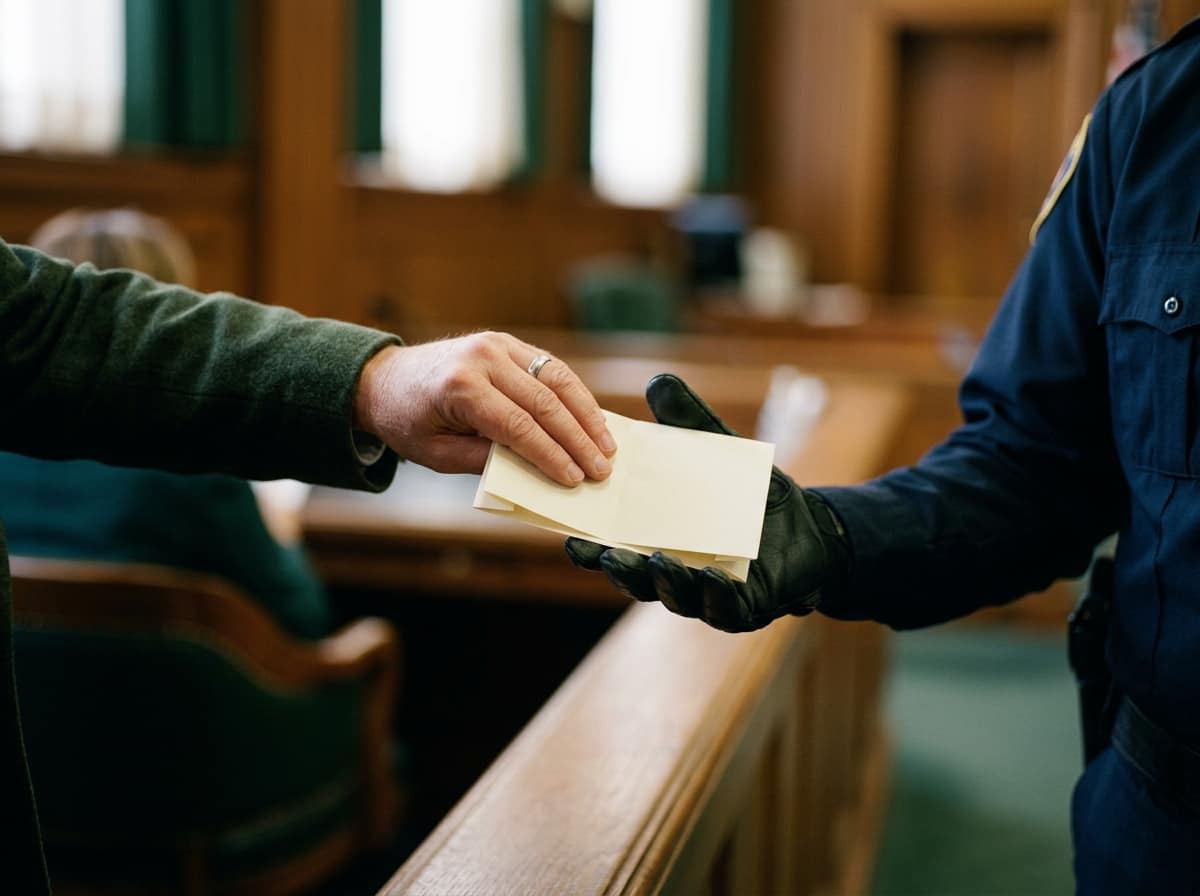
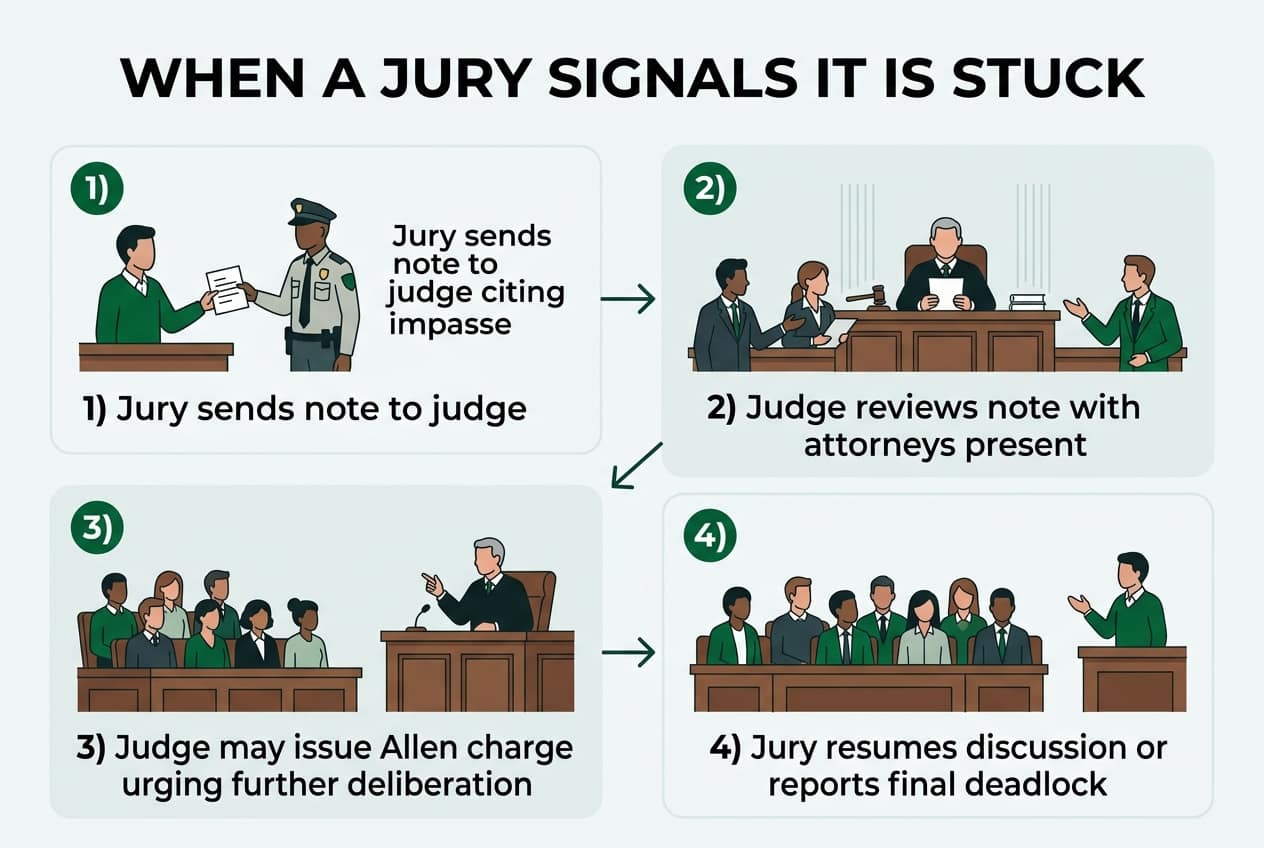
Once the foreperson sends word that the jury can’t agree, the courtroom shifts into a very specific rhythm. It’s not chaos. There’s a script judges follow, built over decades to protect the fairness of the trial. The first move is almost always the same: the judge re-reads part of the jury instructions, sometimes called an Allen charge, pushing jurors to keep talking without pressuring anyone to abandon a genuine belief.
The role of sidebar conferences
Before the judge says anything further to the jury, attorneys usually huddle at the bench. These sidebar conferences matter more than people realize. Lawyers argue over wording, timing, even tone, because a poorly phrased instruction can look like coercion on appeal. Some things typically get hashed out here:
- Whether the jury has deliberated long enough, given the length and complexity of the trial, to justify an Allen charge at all;
- How the judge should phrase any follow-up instruction so it doesn’t pressure the minority jurors to simply cave to the majority;
- Whether either side believes a mistrial should be requested now rather than prolonging deliberations further;
- What specific questions, if any, the judge may ask jurors individually about their ability to keep following the law;
- Whether the jury’s note suggests confusion about the instructions rather than a true, deep disagreement on the facts.
These conferences happen off the record from the jury’s view, but they’re transcribed. That paper trail can matter later if either side ever challenges what happened.
When a judge decides enough is enough
Sometimes the judge questions jurors one by one, quietly, about whether more time would help. There’s no fixed clock on this. A car accident case, similar to the sorts of collisions detailed in coverage of a head injury in a car accident, might deadlock after a day; a complex product liability trial might take three. If jurors still can’t budge, the judge declares a mistrial. That’s it. No verdict, no winner, no loser — just a case that starts over, or gets resolved another way entirely.
What Happens After a Mistrial Is Declared
Retrial timelines and what to expect
Once a judge declares a mistrial, the case doesn’t just disappear. In criminal cases, the prosecution has to decide whether to retry the defendant at all. Sometimes they will. Other times, weighing the cost and the odds of a second hung jury, they’ll offer a plea deal or drop the charges entirely. That decision alone can take weeks.
Civil cases, including personal injury claims, work a bit differently. The plaintiff, not a prosecutor, gets to decide whether to push forward. You can request a new trial before a different jury, and most courts will grant it since a deadlock isn’t a ruling on the merits. It just means twelve people couldn’t agree. If you’re wondering whether stalled proceedings might jeopardize a claim you thought was settled, it helps to know whether you can reopen a personal injury case under similar circumstances.
A retrial isn’t automatic or immediate, though. Courts have to find open slots on an already packed calendar, and that can push a new trial date out six months or more. Many cases settle before that date ever arrives. Facing the cost of a second trial, insurers and defense teams often reconsider their offers once they’ve seen how a jury reacted the first time around. That’s often the real outcome of a deadlock: not a verdict, but a renewed round of negotiation. And here’s the blunt part. Everyone pays more the second time. Attorney hours, expert witness fees, court costs, they all stack up again, and delays strain plaintiffs waiting on compensation for medical bills and lost wages far more than they strain insurance companies. If you’re choosing counsel for a retrial, reviewing things to consider when choosing a personal injury attorney can help you avoid switching lawyers mid-fight.

Deadlocked Juries in Civil Personal Injury Trials vs. Criminal Trials
People often picture a hung jury the way TV shows it: twelve people screaming behind a closed door, nobody budging, guilt or innocence hanging in the balance. That’s a criminal trial. A civil personal injury case works under different rules, and the odds of a true deadlock are lower. Here’s why the comparison matters if you’re waiting on a verdict in your own claim.
The biggest difference is the vote count needed to end the case. Criminal juries almost always need every single juror on board to convict. Civil juries in New Jersey and many other states can reach a valid verdict with a supermajority, so a handful of holdouts doesn’t necessarily blow up the whole trial. Fewer required votes means fewer chances for a true standstill.
| Factor | Criminal Trial | Civil Personal Injury Trial |
|---|---|---|
| Verdict standard | Unanimous, typically 12 of 12 | Often a supermajority, such as 5 of 6 |
| Burden of proof | Beyond a reasonable doubt | Preponderance of the evidence |
| What’s at stake | Liberty, prison time, a criminal record | Financial compensation for injuries and losses |
| Deadlock frequency | More common given the strict threshold | Less common due to the lower evidentiary bar |
Notice the burden of proof row. Beyond a reasonable doubt is a steep climb. Preponderance of the evidence just means more likely than not, essentially a 51% question. That lower bar is one reason civil juries reach agreement more often, even in cases involving contested issues like the nj serious injury threshold for personal injury cases. Deadlock still happens in civil trials. It’s just the exception, not the rule.
How a Hung Jury Can Affect an Injury Claimant’s Case
Why documentation matters more during delays
A mistrial doesn’t end your case. It just resets the clock. Instead of collecting a check, you’re now waiting for a new trial date, and that can take months, sometimes longer depending on the court’s calendar. That waiting period isn’t neutral — it’s a stretch where your paperwork, your records, and your patience all get tested at once. The stronger your file, the better you’ll weather it.
Meanwhile, life doesn’t pause. Medical bills keep arriving. Lost wages keep piling up if you’re still out of work. A retrial doesn’t erase what you owe today; it just delays when you get paid back for it. That’s why staying organized matters so much right now — every receipt, every missed paycheck stub, every follow-up appointment needs a paper trail. Reviewing common mistakes that can ruin your personal injury case is a smart move here, since gaps in documentation during a delay are exactly what defense attorneys look to exploit at a second trial.
Insurance companies know delays wear people down. Some will use the pause to dangle a quick, lower settlement, betting you’re tired of waiting and worried about bills. Don’t assume that’s your only option. Experienced counsel can weigh whether pushing for a retrial makes sense or whether it’s smarter to negotiate now, based on what actually happened in the jury room and how strong your evidence really is. For truck crash claimants specifically, understanding what to do after a semi truck accident can help you keep documentation airtight for whichever path your attorney recommends.
Steps Injury Victims Can Take While Awaiting Resolution
Waiting on a stalled trial is frustrating. There’s no way around that. But how you spend that waiting period can actually shape what happens next, especially if a retrial gets scheduled. A little discipline now saves headaches later.
- Keep detailed records of every medical appointment, treatment, prescription, and missed day of work, since a retrial may hinge on documentation gathered months or even years earlier.
- Stay in regular contact with your attorney about where the case stands, what a mistrial actually means for your timeline, and what, if anything, is expected of you next.
- Avoid posting about your case, your injuries, or your feelings about the trial on social media, since opposing counsel can and does use public posts against claimants.
- Continue attending recommended medical follow-ups even if the case feels paused, because gaps in treatment can be used to argue your injury wasn’t serious.
- Hold onto pay stubs, employer correspondence, and any notes about reduced hours or lost income, since these fill gaps that memory alone won’t cover months later.
If you’re wondering whether a stalled outcome means you’re stuck with it forever, it’s worth understanding whether a personal injury case can be reopened under certain circumstances. That’s a separate question from a mistrial, but the record-keeping habits above matter either way. Some high-profile cases, including deadlocked jury proceedings covered in national news, show just how long these situations can drag on before any resolution.
Special considerations for workers’ compensation claims
Here’s something people mix up a lot: workers’ comp doesn’t go through a jury at all. It’s a separate administrative process handled by a judge in the workers’ compensation system, not a civil courtroom. So a hung jury in a related personal injury or third-party lawsuit doesn’t freeze your comp benefits. If you were hurt on the job and also have a separate injury claim against, say, a negligent contractor or equipment maker, those two paths move independently. Wage-replacement benefits tied to your workplace injury generally continue on their own schedule, regardless of how the civil case shakes out. Don’t assume a delay in one means a delay in the other. Confirm with counsel how the two claims actually interact in your specific situation.
When to Talk to a Personal Injury Attorney About a Stalled Case
What sets experienced counsel apart during a stalled case
A mistrial or an appeal doesn’t just cost you time on a calendar. It costs you real money. Rent doesn’t pause. Medical bills don’t pause. And the stress of not knowing when — or if — you’ll see compensation can wear a claimant down faster than the legal process itself moves. That’s exactly when you need someone in your corner who’s watched this play out before, not someone learning the terrain alongside you. Reading up on when to hire a personal injury attorney for car accident claims can clarify the timing even before a trial goes sideways.
Retrial isn’t the only option after a hung jury, and a good attorney treats it that way. Someone who’s negotiated with insurers before can weigh a settlement offer against the cost, delay, and risk of round two. Sometimes the numbers make settling the obvious move. Sometimes they don’t. That judgment call is where experience earns its keep — an attorney who’s sat on the other side of the table, so to speak, tends to read insurer behavior more accurately, including whether an offer reflects real value or just an attempt to close the file cheap.
A background as a former defense attorney and insurance Claims Director gives an attorney insight into how the other side calculates risk after a deadlock. That’s a rare vantage point. It means realistic conversations about outcomes, not guesswork. Clients get a clearer sense of what a second trial might realistically deliver versus what’s already on the table, which matters enormously when you’re the one waiting on answers and a paycheck.
Not every legal need fits under one roof, and it’s worth knowing the boundaries. Personal injury, catastrophic injury, car and truck accidents, premises liability, slip and fall, workers’ compensation, and product liability claims are the core lanes here. Medical malpractice, wrongful death, motorcycle accidents, dog bites, and mass tort drug or device litigation call for attorneys who focus specifically on those areas. Different rules apply. Different experts, different playbooks entirely. If your stalled case falls outside that core list, ask directly rather than assume.
If you’re in Passaic, Bergen, Hudson, Essex, Middlesex, Mercer, Morris, Monmouth, Somerset, or Hunterdon County and your case has hit a wall, a phone call costs you nothing. Dial 973-471-2300 and talk through strategy with someone who’s seen a deadlock before. It’s also worth understanding how long a jury might realistically stay stuck before a judge steps in — a widely covered case offers a real-world timeline for comparison. Waiting alone rarely helps. Talking it through usually does.
Choosing the right path after a bike accident often comes down to a few honest questions: how serious are the injuries, who else may share fault, and what kind of documentation will matter most later. For crashes involving motorcycles, the more relevant comparison is often to general motor vehicle accident and catastrophic loss representation, since those claims focus on establishing liability and the full financial impact of serious harm. Anyone unsure whether their situation fits that mold can simply ask directly rather than guess.