
You walked out to your car and found long, ugly scratches carved into the paint. It wasn’t an accident. If you’re searching for keying a car meaning, you already suspect someone did this on purpose, and you’re right to want answers. This guide breaks down what counts as keying, why people do it, and what legal options you have in New Jersey to recover your costs.
Keying a Car Meaning: Definition and Legal Classification
Vandalism vs. Accidental Damage
At its core, keying a car means someone deliberately drags a key or another sharp object across the paint, leaving scratches or deep gouges in the body. It’s not a scuff from a shopping cart or a branch brushing against the door. This is a deliberate act. That distinction matters enormously once you’re dealing with police reports, insurance adjusters, or a courtroom. Intent is the whole ballgame here. Without it, you’re just looking at ordinary wear and tear, not a crime.
Legally, this behavior falls under malicious mischief or criminal mischief statutes, which treat it as a form of property damage or vandalism. That classification puts it in the same broad legal family as smashing a window or slashing tires. Someone who keys your car isn’t just being petty. They’re committing an offense that can carry real consequences, from fines to restitution orders to, in serious cases, jail time. It’s a small act with a surprisingly heavy legal weight behind it.
The line between an accident and a crime comes down to state of mind. If a delivery driver’s dolly grazes your bumper, that’s negligence at worst. If your neighbor drags a screwdriver down your hood after an argument, that’s a criminal act requiring proof of intent. Investigators and insurers both look for the same clues: motive, opportunity, and whether the damage pattern looks purposeful. Deep, straight, deliberate lines rarely happen by accident. Honestly, that’s usually the easiest part of the case to prove.
Vandalism vs. Accidental Damage
In New Jersey, the relevant law is the criminal mischief statute, N.J.S.A. 2C:17-3, and it’s worth understanding how it actually works. The statute doesn’t treat all keying incidents the same way; severity is tied directly to the dollar amount of the damage. A few hundred dollars in repair costs might land as a disorderly persons offense, while damage exceeding certain thresholds, like $500 or $2,000, can escalate the charge to a fourth-degree or even third-degree crime. That’s why documenting repair estimates accurately matters so much from day one.
This cost-based tiering also explains why two nearly identical keying incidents can result in wildly different legal outcomes. A shallow scratch buffed out for $150 is a very different case than a gouge requiring a full repaint at $3,000. One writer covering a similar situation noted wryly that whoever keys a car rarely thinks about the legal exposure they’re creating; pity the perpetrator once the repair bill and criminal charge both land. It’s a good reminder that vandalism, however impulsive, has consequences that outlast the moment.
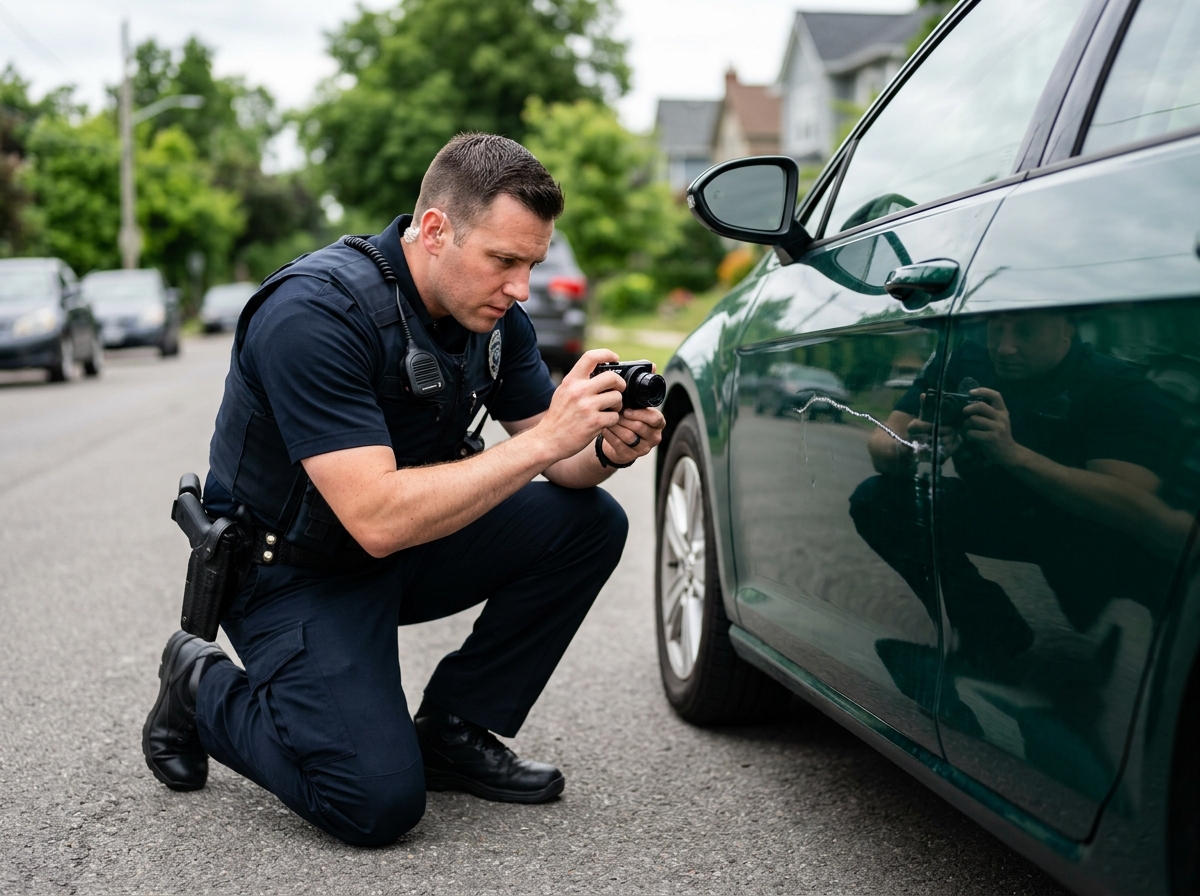
Common Reasons People Key Cars
Motive matters more than people think. It shapes whether police treat the damage as a minor annoyance or take it seriously, and it can affect how an insurance claim gets handled. Most keying incidents fall into a handful of recognizable patterns. Knowing which one fits your situation helps you figure out what to do next.
- Road rage or retaliation after a driving dispute, like cutting someone off, stealing a parking spot, or honking at the wrong person on a bad day.
- Personal conflict with someone who knows you, including an ex-partner, a feuding neighbor, or a coworker with a grudge that finally boiled over.
- Random vandalism or juvenile mischief, often committed by bored teens roaming a neighborhood at night with nothing better to do.
- Parking disputes, which are especially common in NJ’s cramped lots and narrow city streets where a few inches of misjudged space can spark real anger.
- Jealousy or resentment aimed at flashy, expensive, or newly purchased vehicles, sometimes just for existing on the wrong block.
- Opportunistic targeting during other property crimes, where a keyed panel is almost an afterthought next to a broken window or stolen item.
Some of these overlap in messy ways. A parking dispute can curdle into personal retaliation fast, and what looks random might actually be aimed at you specifically. If the damage follows a pattern — say, it happens near your workplace or after certain interactions — that’s worth noting for police. For a broader rundown of first steps once you spot the damage, guidance on what to do if your car gets keyed can fill in practical gaps here. Random vandalism, frankly, is the hardest to solve. There’s usually no motive to trace and no witness who cares enough to talk.
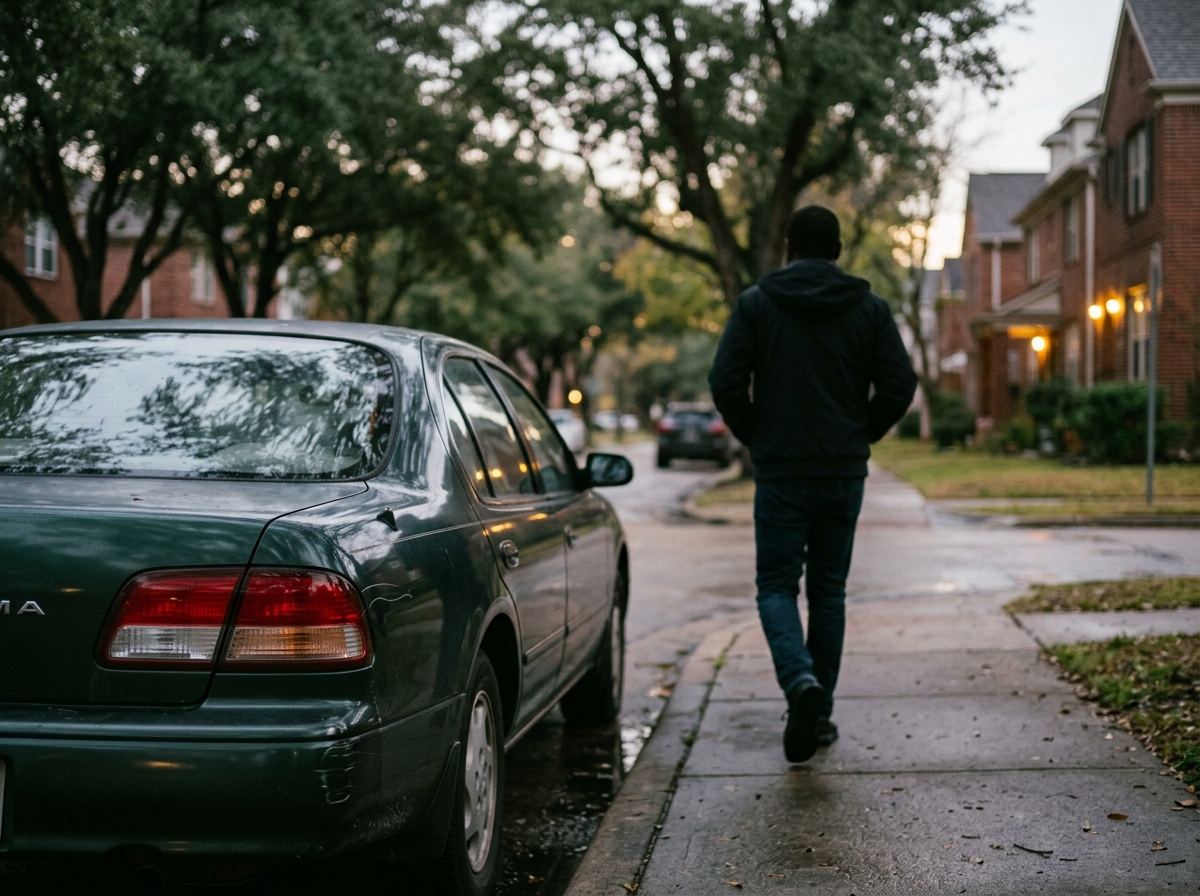
How Much Does Keying Actually Cost to Repair?
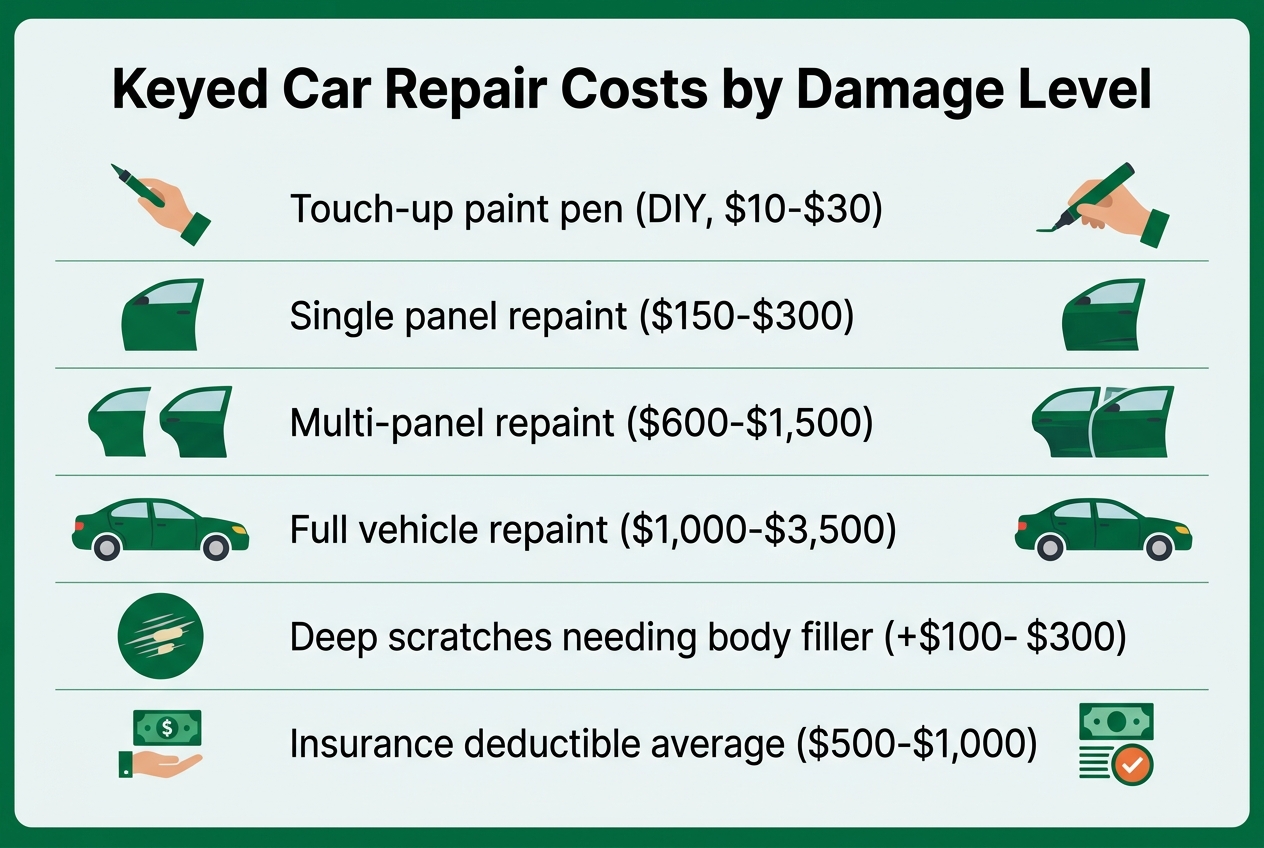
Not all scratches are created equal, and that’s really what drives the bill. A light surface mark that only scuffs the clear coat is a different animal than a gouge that digs down to bare metal. The deeper the damage, the more labor, materials, and prep work it takes to fix it right — and the more it costs you. If you’re trying to figure out why one shop quoted you $80 and another quoted $900, depth is usually the answer.
| Damage Type | Typical Fix | Estimated Cost |
|---|---|---|
| Light surface scratch (clear coat only) | Touch-up paint pen | $10-$30 |
| Shallow scratch, no metal exposed | Professional buffing/polishing | $50-$150 |
| Deep scratch reaching primer or metal | Full panel repaint | $150-$1,500+ per panel |
| Multiple panels keyed | Multi-panel repaint | $1,500-$3,500 |
| Full-length keying around the vehicle | Full-vehicle repaint | $3,000-$5,000+ |
Touch-up pens are cheap and tempting, but let’s be honest: they’re a band-aid, not a fix. They can mask a light scratch decently well, but they rarely match your car’s exact paint code, and they won’t do a thing for a gouge that’s hit metal. Buffing and polishing works well for surface-level marks because it’s actually removing a thin layer of clear coat rather than covering anything up. Once a scratch is deep enough to catch your fingernail, though, you’re likely looking at a repaint. Depth determines cost, full stop. Shops will often check this with a simple fingernail test before quoting you anything. Vandalism like this doesn’t happen in a vacuum, either — understanding why people key cars can help you gauge whether you’re dealing with a one-time incident or something more targeted.
What to Do Immediately After Discovering Your Car Was Keyed
Finding fresh scratches gouged into your paint is infuriating. But before you do anything else, slow down. What you do in the first hour matters more than you’d think, both for insurance purposes and for any legal action down the road. Acting methodically now saves you headaches later.
- Take clear photos and video of every scratch or gouge, shooting from multiple angles and distances so the scope of the damage is obvious;
- Walk the area to see if neighbors, shopkeepers, or a doorbell camera might have caught the vandal in the act;
- Note the exact time, date, and location, since insurers and police both want specifics, not vague guesses;
- Check your own dashcam footage if you have one, even if you don’t think the incident happened while you were driving;
- Write down anything unusual you remember, like an argument earlier that day or a person lingering near your parked car.
Filing a Police Report the Right Way
Call the non-emergency police line, not 911, unless someone’s in immediate danger. An officer will document the damage and give you a report number. That number matters. Most insurers won’t process a vandalism claim without it, and if the case ever escalates, understanding Keying car – Idioms by The Free Dictionary shows just how common a phrase, and a headache, this kind of damage has become for drivers everywhere.
Once the report’s filed, call your insurance provider and ask specifically about comprehensive coverage, since that’s the piece of your policy that typically handles vandalism. Be ready to answer questions about when and where it happened. And don’t skip this step even if you’re unsure whether you’ll file a claim; failing to report matters later, similar to how delaying notification after a car accident can complicate coverage down the line. One last thing: never confront someone you suspect keyed your car. It rarely ends well, and it can turn a property dispute into something physical, which is a whole different problem, including one where documenting a head injury becomes relevant.
Insurance Coverage: Will It Pay for Keying Damage?
Whether your insurer pays a dime for keying damage comes down to one word: comprehensive. Comprehensive coverage handles vandalism, theft, weather, and other non-collision losses, so a keyed hood or door panel typically qualifies. Liability-only policies won’t help you at all here, since they only cover damage you cause to someone else. Before you call your agent, it helps to know what the process actually looks like and where the math might not work in your favor.
| Step | What Happens | Why It Matters |
|---|---|---|
| 1. Report the incident | File a police report documenting the vandalism | Insurers usually require a report number before opening a claim |
| 2. Get a repair estimate | Visit a body shop for a written quote | Confirms whether costs exceed your deductible |
| 3. Check your deductible | Compare estimate against your comprehensive deductible | A $2,500 deductible against a $600 scratch means paying out of pocket |
| 4. Submit the claim | Provide the police report number, photos, and estimate | Complete documentation speeds up approval |
| 5. Review premium impact | Ask your carrier how the claim affects renewal rates | Some insurers raise premiums even for no-fault vandalism claims |
Here’s the part nobody likes talking about: filing doesn’t always pay off. If your deductible is $1,000 and the damage costs $700 to fix, you’re covering it yourself anyway. And even a paid-out claim, though you did nothing wrong, can nudge your rate up at renewal. Some drivers skip small claims entirely for that reason. If the vandalism ties into a bigger dispute, such as a neighbor conflict or a targeted act tied to a car accident, understanding how to file a personal injury claim in NJ can clarify whether separate legal action makes sense alongside your insurance claim. Property insurance disputes elsewhere offer a useful parallel too; anyone curious how claim delays and denials play out on a larger scale might find it instructive to review recovery timelines after major insured losses. Bottom line: check your policy type, run the numbers, and file only when it’s actually worth it.
When Keying a Car Crosses Into a Legal Case
Most keying incidents stay small, but the law still cares about dollar amounts. In New Jersey, criminal mischief causing a loss of $500 or less is a disorderly persons offense, a loss of more than $500 but less than $2,000 is a fourth-degree crime, and a loss of $2,000 or more caused purposely or knowingly is a third-degree crime, the kind that carries real prison exposure. That distinction matters because it shapes how aggressively police and prosecutors treat the case, and it’s often the first thing people ask about after searching for why does he say “key your car?” and realizing the phrase carries legal weight far beyond slang.
Criminal charges punish the vandal, but they don’t put money back in your pocket. That’s where a civil claim comes in — filed separately, aimed squarely at recovering repair costs, diminished resale value, or rental car expenses your insurer won’t cover. You can pursue both at once. Proving the case, though, means identifying who actually did it. Doorbell footage, parking lot cameras, a neighbor who saw someone loitering, even a confession made in anger — these are what turn a mystery scratch into a named defendant. Without that, you’re stuck arguing with your own insurance company and little else.
Some situations demand more than a property damage claim. If the keying is one incident in a pattern — an ex who won’t stop showing up, a neighbor waging a slow-motion feud, a coworker escalating after a workplace dispute — you may be looking at harassment or stalking claims that go well beyond a scratched door panel. And if that dispute turns physical, if someone confronts you and you’re hurt, you’ve stepped into personal injury territory entirely. Building any of these cases well means avoiding early missteps, and reviewing common mistakes that can ruin your personal injury case before you talk to insurers or give a statement can save you real headaches later. Don’t wing it.
How a Personal Injury Attorney Can Help When Vandalism Turns Into Something More
Get Guidance for NJ Incidents That Cause Injury or Loss
Most of the time, a keyed car is a police report and an insurance claim. Nothing more. But confrontations don’t always stay calm. Someone catches the person mid-act, words get heated, and suddenly you’re dealing with a shove, a punch, or a car accident that happens when a driver flees the scene. That’s when a simple property dispute becomes something a personal injury attorney needs to look at. Understanding why car keying is such a common form of revenge can even help explain why these disputes turn personal so fast.
When a vandalism incident leads to physical harm, you’re no longer just filing a claim for scratched paint. You may have medical bills, lost wages, and pain and suffering to account for. An experienced attorney can help sort out who’s liable, gather witness statements, and pursue compensation that a basic insurance claim never covers.
A team led by an attorney with a background as a defense lawyer and insurance Claims Director understands exactly how carriers evaluate, and often minimize, these hybrid claims. That inside knowledge matters when adjusters try to lowball a case involving both property damage and injury.
Rather than guessing at damages, a well-documented case built with expert consultation holds up far better under scrutiny, especially when a keying incident turns into a larger injury claim tied to an assault or a chaotic escape attempt. If a vandalism dispute escalated into a road incident, it’s worth reviewing when to hire a personal injury attorney for a car accident, since the timing can affect your options. Serving Passaic, Bergen, Hudson, Essex, and surrounding NJ counties, a case evaluation is a phone call away at 973-471-2300.
Before settling on a path forward, it helps to be clear about what kind of claim you actually have: an injury caused by a driver, an unsafe walkway, a workplace hazard, or a defective product follows a very different road than a claim rooted in a doctor’s or hospital’s error, which belongs with a firm that handles medical negligence day in and day out. Ask what evidence exists and how quickly it could disappear, who else may share responsibility, and whether the full long-term cost of care has been accounted for rather than just the bills already in hand. Getting those questions answered early tends to matter more than moving fast, and a candid conversation with someone who handles your specific type of case is usually the fastest way to find out where you stand.