
You slipped on a wet floor or a cracked sidewalk in Passaic, and now you’re staring down medical bills you didn’t budget for. Before you sign anything or talk to an insurance adjuster, you need to understand how slip and fall attorneys actually build these cases and what separates a strong claim from a weak one. It’s not as simple as “I fell, they pay.” This guide walks you through what matters most in 2026, so you can file with confidence instead of guesswork.
Why Slip and Fall Claims Are Harder to Win Than They Look
How Insurance Companies Evaluate These Claims
Here’s the part most people don’t expect: a fall on someone’s property doesn’t mean that property owner admits anything. Insurers treat every slip and fall as a dispute to be won, not a bill to be paid. New Jersey law puts the burden on you to show the owner knew, or reasonably should have known, about the hazardous condition and failed to fix it or warn you. That’s a real legal standard, not a formality. Adjusters know most claimants don’t fully grasp it.
Expect pushback aimed squarely at you. Insurers love to argue the wrong shoes caused the fall, or that you were texting, rushing, or simply not watching where you stepped. Reviewing common mistakes that can ruin your personal injury case helps explain why these arguments land so often — small missteps early on give the defense exactly the opening it needs. It’s an old playbook. It still works more than it should.
Time is the other enemy. Surveillance footage gets overwritten in days. Maintenance logs go “missing.” Witnesses move on and forget details. Without a lawyer sending preservation letters fast, the evidence that would prove negligence often vanishes before a claim even gets filed, leaving you with nothing but your word against theirs.
Common Places Where Slip and Fall Accidents Happen
Falls don’t happen at random. They tend to cluster in the same kinds of spots, year after year, because the same hazards keep getting overlooked. Knowing where these accidents typically occur can help you spot danger before you’re on the ground. It also matters later, when you’re trying to prove a property owner should have known about the risk.
- Supermarkets and grocery stores, where wet floors from produce misting, spilled drinks, or melted ice often go unmarked for far too long.
- Malls, retail stores, and restaurants, where cluttered walkways, loose mats, and merchandise left in aisles create tripping hazards during busy hours.
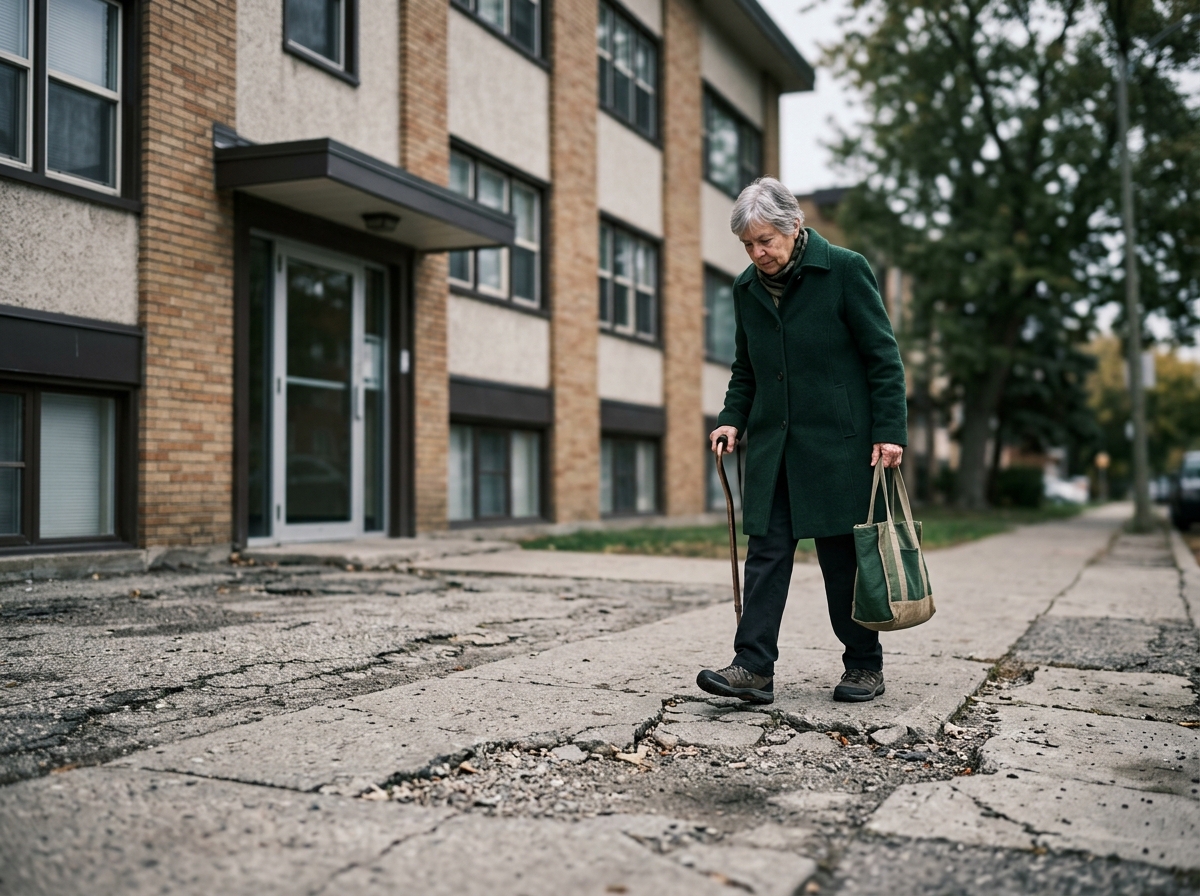
- Hotels, parking lots, and sidewalks, where cracked pavement, poor lighting, and neglected snow or ice removal catch guests and pedestrians off guard; in fact, winter slip and fall accidents spike sharply once icy conditions set in.
- Office buildings and residential properties, where structural hazards like broken stairs, worn carpeting, or faulty railings often sit unrepaired for months.
- Gyms, elevators, and loading docks, where wet surfaces, uneven flooring, or poor maintenance schedules add another layer of risk many visitors never think to watch for.
Some situations don’t fit neatly into these categories. An animal darting across a walkway, for instance, can trigger a fall that raises very different legal questions. Don’t assume your situation is covered just because it happened on someone’s property. Confirm the specifics directly with a firm before you build expectations around it.

How Slip and Fall Attorneys Can Help You with Your Case
Building a Well-Documented Compensation Case
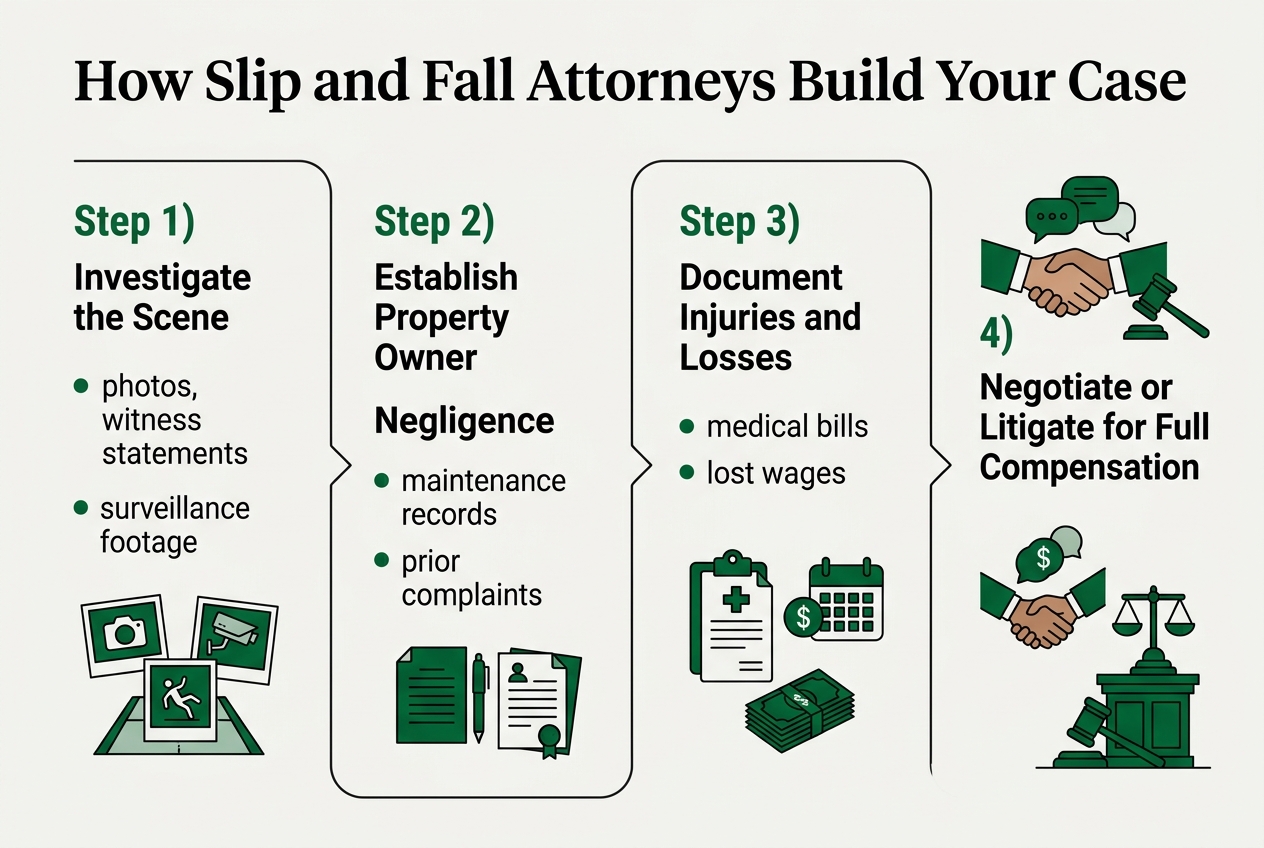
A strong claim starts at the scene. That means photos of the hazard, the lighting, any missing warning signs, and the exact spot where you went down. Witness names matter too — people move away, memories fade. Evidence collected early holds up later. Surveillance footage from many local businesses gets overwritten within days or weeks, so there’s a real clock running before proof disappears for good.
Liability isn’t automatic just because you fell. You have to show the property owner was negligent — that they knew, or should have known, about the spill, the broken step, or the icy walkway, and failed to fix it within a reasonable time. Maintenance logs, prior complaint records, and inspection schedules often make or break that argument. It’s tedious work, but it’s the backbone of the case.
Injuries also need documentation beyond a single emergency room visit. Lawyers often bring in medical experts, economists, and vocational specialists to calculate lost wages and future costs. If you’re confused about symptom timing, it helps to understand how long after an accident can injuries show up, since some conditions don’t surface for days.
Negotiating From a Position of Insurance Industry Experience
Insurance adjusters aren’t neutral. Their job is to close files cheap. Knowing how a claims department evaluates a file — what makes them nervous, what makes them lowball — changes the conversation. A lawyer who’s sat on the other side of the table brings that perspective directly into negotiations.
That background matters most with injuries that aren’t obvious on day one, including head trauma from a fall. Documenting how to prove a traumatic brain injury often requires imaging, cognitive testing, and a treating physician willing to connect the dots in writing — and that kind of medical evaluation and treatment comes from doctors and specialists, not from the law firm itself, which builds its case around that outside documentation. Adjusters push back hard on soft-tissue and cognitive claims; a well-built file makes that pushback harder to sustain.
If a fair settlement never materializes, litigation is the next step. Filing suit, taking depositions, and preparing for trial puts pressure on insurers who’d rather settle than face a jury. Most cases still resolve before trial — but only once the other side believes you’re actually ready for one.
slip and fall attorneys: What Sets an Experienced Legal Team Apart
Thirty years of premises liability and personal injury work in northern New Jersey teaches a firm something insurance adjusters would rather you not know: how claims actually get denied. That track record matters more than it sounds. Property owners and their insurers have handled slip and fall disputes before, probably many times. You, most likely, haven’t. An experienced team levels that gap, and experience is really the whole ballgame here.
A lead attorney who spent years on the other side, as a defense lawyer and an insurance company Claims Director, brings a particular kind of value. He’s seen the playbook from inside the building. He knows how adjusters value a claim, what language they use to minimize payouts, and which documentation makes a case hard to dispute. Paired with other attorneys on the team, that insider knowledge turns into strategy rather than guesswork. If you’re still narrowing down representation, reviewing things to consider when choosing a personal injury attorney is a smart starting point before you sign anything.
Beyond strategy, there’s communication. Good firms keep clients updated on case status and medical progress instead of going quiet for months. That’s not a courtesy. It’s how you catch problems early. And when it comes to valuing a claim, a serious team doesn’t guess at numbers; it brings in outside experts, medical specialists, economists, accident reconstructionists, to build a documented case instead of a ballpark figure. Thorough documentation is what separates a claim that settles fairly from one that gets picked apart.
Comparing Your Options for Handling a Property Injury Claim
Not every fall needs the same response. Some claims settle fine without a fight. Others turn into a slog against an insurance adjuster trained to pay as little as possible. Before deciding how to move forward, it helps to see the paths side by side, including one many people overlook entirely: workers’ compensation.
| Approach | Best For | Main Risk |
|---|---|---|
| Self-negotiating with insurer | Minor injuries, clear liability, small bills | Lowball offers, no leverage |
| General practice lawyer | Simple cases needing basic guidance | Less familiarity with defense tactics |
| Attorney with defense-side experience | Disputed liability, serious injuries | None notable; costs a contingency fee |
| Settling early | Fast cash, minimal medical treatment | Underselling long-term damages |
| Litigation for full damages | Significant or ongoing injuries | Takes longer, requires patience |
The attorney column deserves a second look. A general practice lawyer might handle the paperwork fine, but someone who’s actually sat on the defense side knows how adjusters build their files to minimize payouts. That inside knowledge matters more than people expect. On the question of timing, settling early feels tempting when bills are piling up, but it can lock you into a number before you know the full extent of your injury. Reviewing the benefits of hiring a personal injury lawyer is a reasonable first step before signing anything. One more wrinkle: if the fall happened at your job, this isn’t a premises liability case at all. It belongs in the workers’ compensation system instead, which runs on a different timeline and different rules entirely.
Steps to Take After a Fall on Someone Else’s Property
What you do in the first 48 hours after a fall often decides whether your claim holds up. Memories fade, hazards get cleaned up, and witnesses move on. That’s why the steps below matter more than people think.
Seek medical attention immediately and keep every record that comes with it. Even if you feel fine, some injuries, like soft tissue damage or a concussion, don’t show symptoms right away. Ask for a copy of your discharge paperwork and hold onto every bill, prescription, and follow-up note. Next, report the incident in writing to the property owner or manager before you leave, if possible. A verbal mention isn’t enough. Get a copy of the incident report or, at minimum, an email confirming you filed one.
Documentation That Strengthens a Claim
Strong evidence is built, not remembered. The table below breaks down what to capture and why it matters later.
| Action | What to Capture | Why It Matters |
|---|---|---|
| Photograph the scene | Hazard, lighting, wet floors, debris, missing signage | Conditions get fixed or cleaned within hours |
| Get witness contacts | Names, phone numbers, what they saw | Independent accounts carry weight insurers can’t dismiss |
| Keep medical records | Diagnosis, treatment plan, billing statements | Links your injury directly to the fall |
| Save the incident report | Date, time, manager’s name, copy for yourself | Creates a timestamped record the owner can’t deny later |
| Avoid recorded statements | Nothing, until you’ve spoken with an attorney | Insurers use early statements to shrink claims |
Notice the pattern: speed and specifics win. The same discipline applies broadly, and reviewing steps to take immediately after a car accident shows how similar documentation habits protect injury victims regardless of where the accident happens. Last, contact a premises liability attorney promptly, before evidence disappears and before you say something an insurer can use against you.
When a Fall Points to a Different Kind of Legal Issue
Not every fall fits neatly into the premises liability box. Sometimes the real cause changes which type of claim actually applies, and that matters a lot for how you move forward. Figuring out the real cause early saves you time and keeps you from chasing the wrong kind of claim.
- A fall caused by a cracked wheel, a collapsing ladder, or some other defective product may fall under product liability rather than a standard premises liability claim against a property owner.
- A fall inside a nursing home that involves possible neglect is a different animal entirely. That kind of claim isn’t part of this firm’s advertised services, so confirm it directly with the firm before assuming it fits any standard injury claim; premises liability and slip and fall work may apply if it’s simply a fall, but abuse and neglect need to be checked case by case.
- A fall at work is typically handled through workers’ compensation, not a personal injury lawsuit against a third party, since state benefits usually apply regardless of fault.
- A fall caused by a dog or other animal sits closest to premises liability, but ownership, leash laws, and location all affect it, so it needs to be verified case by case — this firm doesn’t advertise dog bite claims as a standalone service, so don’t assume coverage without asking.
- A severe, life-altering fall, say one that causes permanent disability or long-term care needs, may be handled as a catastrophic injury claim instead of a routine slip and fall case.
Here’s the blunt truth: guessing wrong on which category your fall belongs to can cost you real money and real time. A quick call to sort it out beats months of filing the wrong paperwork.
Recovering Compensation and Protecting Your Rights
Why Timing Matters Under New Jersey’s Statute of Limitations
New Jersey gives you two years from the date of a fall to file a personal injury lawsuit. Miss it, and your claim is almost certainly gone for good, no matter how clear the property owner’s fault was. Two years sounds like a long time. It isn’t. Evidence disappears, witnesses move, and insurance adjusters bank on delay working in their favor.
Waiting also weakens your medical picture. If you don’t get treatment documented early, the insurer will argue your injury came from something else entirely. That’s a cheap trick, but it works often enough that they keep using it. Starting the process soon after a fall protects both your legal deadline and the medical record you’ll need later.
Types of Damages You May Be Owed
Compensation in a fall case usually covers more ground than people expect. Medical costs are the obvious piece: emergency care, surgery, physical therapy, follow-up visits — treatment you’ll get from doctors and medical providers, not from a law firm. Lost wages come next, covering time off work now and reduced earning capacity down the road. Pain and suffering accounts for the physical and emotional toll, which courts and insurers do take seriously when it’s properly documented. For severe injuries, long-term care needs matter too. If you want more on lasting impacts, you can look at material on long term effects from a brain injury, since head injuries from falls often carry costs years down the line; a catastrophic injury claim is built to document that long-term cost, working alongside outside medical experts rather than providing the treatment itself.
Why Documented, Expert-Backed Claims Recover More
Guessing at your losses is a losing strategy. Insurers reject self-estimated figures constantly, and they’re not wrong to be skeptical, honestly, since numbers pulled from thin air rarely hold up. Claims built with medical experts, economists, and life-care planners carry weight because every figure traces back to evidence. That difference often shows up directly in the settlement check.
Serving Clients Across Northern and Central New Jersey
Fall injuries don’t respect county lines, and neither should your options for help. Representation reaches clients throughout Passaic, Bergen, Hudson, Essex, Middlesex, Mercer, Morris, Monmouth, Somerset, and Hunterdon counties, covering dense urban sidewalks and suburban shopping centers alike. Wherever the fall happened, the documentation process works the same way.
Starting a Case Evaluation
You can begin at 165 Prospect St., Passaic, NJ 07055, or by calling 973-471-2300. A short conversation tells you where you stand, what the deadline looks like, and what documentation you’ll need moving forward. No pressure, just answers.
Slip and fall cases often come down to proving what the property owner knew and when, which is why having someone in your corner early on can make a real difference. Weiner Mazzei is among the firms that take on these claims, helping people hurt on someone else’s property sort through the details that matter most. From here, the best next step is simply talking through what happened with an attorney who can tell you honestly where you stand.