
One moment you’re walking through a grocery store or down an icy sidewalk, and the next you’re on the ground, injured, confused, and unsure who bears responsibility for the medical bills piling up. New Jersey property owners have a legal duty to maintain safe premises, yet insurance companies routinely deny valid claims or offer settlements far below what victims deserve. This guide, prepared by Weiner Mazzei, breaks down what you need to know about your rights, the evidence that strengthens your case, and why consulting an experienced slip and fall lawyer in New Jersey early can mean the difference between a denied claim and full compensation. Whether your fall happened last week or you’re still weighing your options in 2026, understanding the law is the first step toward protecting your recovery.
Understanding Slip and Fall Accidents in New Jersey
What Qualifies as a Slip and Fall Case
A slip and fall case is a type of premises liability claim. It happens when someone gets hurt because of a dangerous surface condition on another person’s or business’s property. Think wet floors, icy walkways, torn carpeting, or uneven pavement. What makes the case legally meaningful is the property owner’s failure to fix the hazard or warn people about it.
Not every fall qualifies as a valid claim, though. The injured person must show the property owner knew, or should have known, about the danger. Courts also look at whether the hazard sat there long enough for a reasonable owner to notice it. For guidance on how these standards apply, resources like New Jersey Slip & Fall Lawyers | NJ Premises Liability … explain the basics clearly.
How These Claims Differ from Other Injury Claims
Slip and fall claims focus on property conditions, not driver behavior or product defects. That’s different from a car crash, where fault usually centers on traffic violations. Comparing case types side by side, such as reviewing a guide on the best attorney for car accidents new jersey, shows how evidence and strategy shift depending on the accident type.
In slip and fall cases, timing matters a lot. Evidence like spilled liquid or broken tiles can vanish within hours. Witnesses may forget details just days later. Quick documentation is often more critical here than in other injury claims.
Examples of Common Slip and Fall Scenarios
Common examples include slipping on a wet grocery store floor, tripping over a cracked sidewalk, or falling on icy apartment complex stairs. Many local businesses face claims tied to poor lighting in stairwells or cluttered aisles. Each scenario comes down to one question: was the hazard foreseeable and preventable?
Other frequent cases involve loose handrails, unmarked spills in restaurants, or potholes in parking lots. These situations show how ordinary settings turn into legal problems once hazards go unaddressed.
Why You Need a Slip and Fall Lawyer in New Jersey
How an Attorney Strengthens Your Claim
A skilled attorney turns a confusing claim into a clear legal strategy. Insurance companies often try to minimize payouts or blame the victim. A lawyer knows how to counter these tactics with evidence and firm negotiation.
Your attorney also handles deadlines, paperwork, and legal filings. Miss a deadline, and your claim can end before it starts. Legal guidance protects your rights at every step, from the first phone call to a possible trial.
Choosing the right lawyer matters just as much as hiring one at all. Reading 10 things to consider when choosing a personal injury att… can help you compare experience, communication style, and track record before you sign anything.
Contingency Fee Basis Explained
Most slip and fall lawyers work on a contingency fee. You pay nothing upfront. The lawyer only gets paid if you win your case, usually taking a percentage of the final settlement or verdict.
This arrangement gives injured people access to strong legal help, no matter their income. It also pushes the attorney to fight hard, since their payment depends directly on your result. In New Jersey, court rules cap these fees on a sliding scale that starts at 33⅓% of the first $750,000 recovered, and an agreement can set a lower percentage.
What a Free Case Evaluation Involves
A free case evaluation lets you discuss your accident with no financial risk. The lawyer reviews your medical records, photos, and accident details to judge how strong your claim is.
During this meeting, attorneys often start investigating right away. This includes gathering surveillance footage, interviewing witnesses, and checking maintenance logs. Solid evidence built early supports stronger negotiation later.
Comparing firms through resources like Top Rated New Jersey Slip and Fall Lawyers helps you find experienced representation before your free consultation.
Proving Liability: The Legal Foundation of Your Claim
Duty of Care Owed by Property Owners
New Jersey law requires property owners to keep their premises reasonably safe. This is called the duty of care. How much care is owed often depends on why you were on the property in the first place. Invitees, like shoppers or restaurant guests, get the highest level of protection.
Owners must inspect their property regularly. They must fix known hazards within a reasonable time. They must also warn visitors about dangers that can’t be fixed right away, such as a wet floor during mopping. Many local businesses post cones or signs to meet this obligation. Skip that step, and you create real risk for visitors.
Elements Required to Prove Negligence
To win a slip and fall case, you must prove four things. First, the owner owed you a duty of care. Second, they breached that duty through action or neglect. Third, that breach caused your fall. Fourth, you suffered real damages, such as medical bills or lost wages.
Evidence matters here. Photos, surveillance footage, and witness statements all help build a strong case. Some injuries need deeper proof, especially head trauma. Understanding how to prove a traumatic brain injury can strengthen a claim involving cognitive symptoms.
Common Defenses Property Owners Raise
Property owners often argue the hazard was open and obvious. They may claim you simply weren’t paying attention. Insurance companies sometimes argue the danger existed for too short a time to be discovered. Another defense involves shared fault, where owners claim you contributed to the accident.
These defenses can reduce or block compensation under New Jersey’s comparative negligence rules. A skilled attorney, such as a Slip and Fall Lawyer – Newark, can push back with solid evidence and legal strategy.
Who Can Be Held Responsible for Your Injury
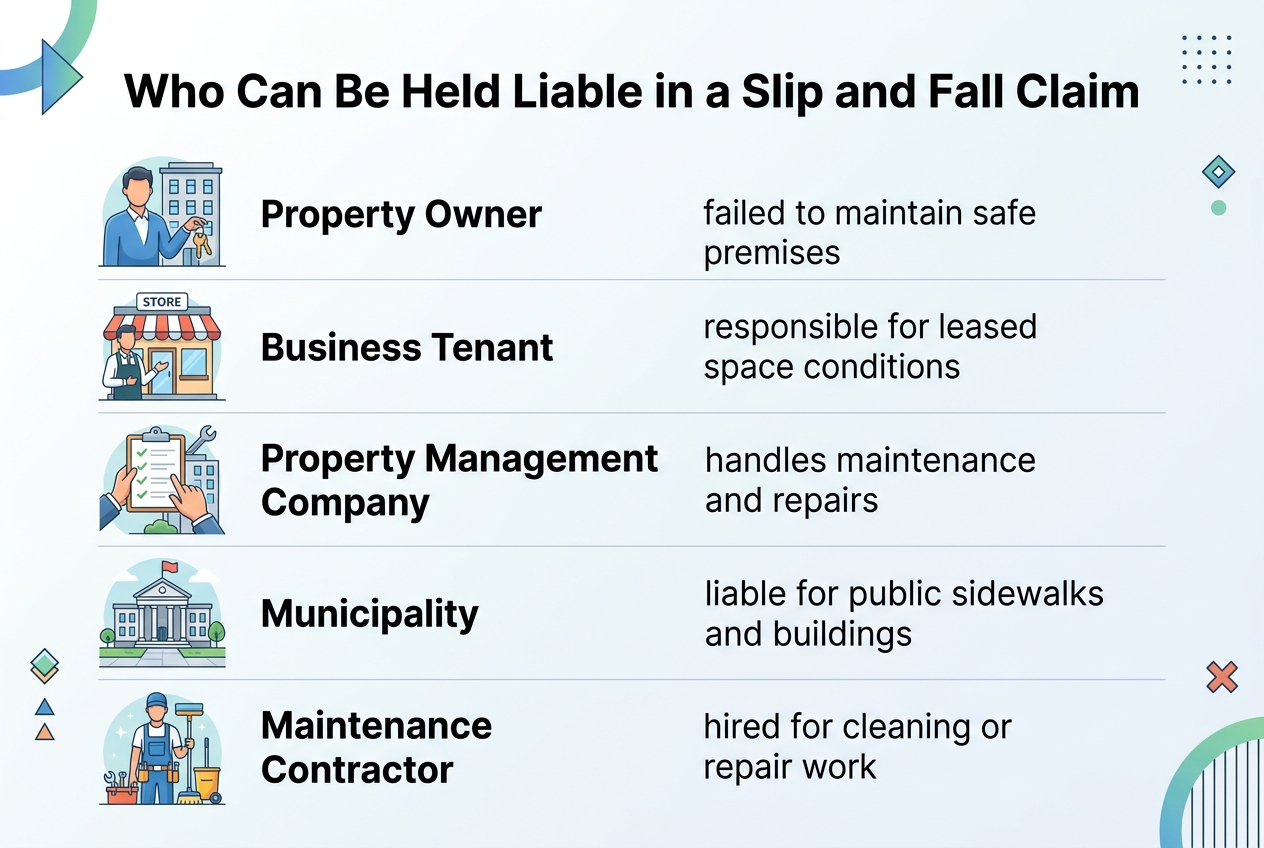
More than one party can share liability for a fall. New Jersey follows a comparative fault rule. If you were partly careless, your compensation may be reduced by your percentage of fault. You can still recover damages as long as you’re not more than 50% responsible. Working with one of the Best Personal Injury Lawyers in New Jersey helps sort out who owes what.
Property Owners and Landlords
Homeowners and landlords must keep walkways, stairs, and common areas safe. Their homeowner’s or landlord insurance policy typically covers injury claims.
Business Owners and Commercial Tenants
Stores, restaurants, and office buildings carry commercial liability insurance for guest injuries. Several parties may share blame, including:
- The store owner who failed to clean up a spill within a reasonable time;
- The property management company hired to maintain the parking lot and entryways;
- A cleaning contractor who left floors wet without posting warning signs;
- The building’s landlord if a structural defect caused the fall;
- A snow removal company that missed icy patches near an entrance.
Municipalities and Government Property
Falls on public sidewalks or in government buildings come with strict notice deadlines. Claims often require filing within 90 days. Learning can you reopen a personal injury case matters if new evidence surfaces later.

Top Causes of Slip and Fall Accidents
Wet or Uneven Flooring Surfaces
Flooring problems cause a huge share of falls in New Jersey. Hazardous surfaces often develop because owners ignore small issues until someone gets hurt.
- Spilled liquids left unattended on tile or hardwood floors in stores and restaurants
- Torn or bunched carpeting that catches shoes and causes sudden trips
- Freshly mopped floors without warning signs or barriers
- Cracked sidewalks or potholes outside office buildings and apartment complexes
- Loose floorboards or damaged tiles that shift underfoot
Ice, Snow, and Weather-Related Hazards
New Jersey winters bring serious risks. Snow and ice removal is required by law, but many local businesses fall behind anyway. Delayed shoveling, refrozen slush, and untreated black ice on walkways create dangerous conditions. Property owners who skip salting or plowing after a storm often bear responsibility when someone slips near an entrance or parking lot.
Poor Lighting and Structural Defects
Dim hallways, broken stairwell lights, and missing handrails hide dangers until it’s too late. These maintenance failures are just as serious as those causing large-scale collisions; you can read about the most common types of large truck accidents for comparison. Anyone unsure about their rights can consult New Jersey Personal Injury Lawyers – Local Injury Attorne… for further guidance.
Where Slip and Fall Accidents Most Often Happen
Retail Stores and Shopping Centers
Grocery stores, malls, and big-box retailers see some of the highest slip and fall numbers in New Jersey. Spilled liquids, wet entryways, and cluttered aisles create constant hazards. High foot traffic means spills go unnoticed longer, raising the risk for shoppers of all ages.
Parking lots deserve attention too. Potholes, ice patches, and poor lighting cause many falls before customers even reach the front door. Just as drivers should understand the 5 most common types of car accidents before heading out, shoppers benefit from knowing where retail hazards typically hide.
Workplaces and Construction Sites
Workplaces carry their own dangers. Warehouses, factories, and office buildings often have wet floors, exposed wiring, or uneven flooring. Construction sites raise the stakes further, with scaffolding, loose debris, and unfinished surfaces creating serious fall risks daily.
Employees face pressure to keep working through hazardous conditions. This makes workplace falls especially common in physically demanding jobs. Many local businesses invest in safety training, yet accidents still happen when equipment fails or supervision lapses.
Apartment Complexes and Private Homes
Residential settings pose risks too. Broken stairs, icy walkways, and poorly lit hallways in apartment complexes cause frequent injuries, especially in winter. Landlords carry a duty to keep common areas reasonably safe for tenants and visitors.
Private homes present smaller-scale but real dangers, from loose rugs to slick bathroom floors. Anyone hurt in these settings should consult a New Jersey Personal Injury Lawyer | Free Consultation to understand their legal options after a residential fall.
Injuries and Compensation in Slip and Fall Claims
Common Injuries from Falls
Falls can cause mild bruises or severe, life-changing harm. Severity often depends on the victim’s age, the surface, and the height of the fall. The table below shows common injuries and their typical impact.
| Injury Type | Typical Severity | Common Recovery Time |
|---|---|---|
| Sprains and Strains | Mild to Moderate | 2-6 weeks |
| Fractured Wrist or Hip | Moderate to Severe | 3-6 months |
| Herniated Disc | Severe | 6-12 months |
| Traumatic Brain Injury | Severe to Catastrophic | Months to lifelong |
| Spinal Cord Damage | Catastrophic | Often permanent |
Types of Damages You Can Recover
Economic damages cover medical bills, lost wages, and future care costs. Non-economic damages cover pain, suffering, and loss of enjoyment of life. Insurers may also raise questions about prior health issues, which is why understanding how do pre existing conditions impact personal injury claims matters early on.
Wrongful Death Claims from Fatal Falls
Some falls prove fatal, especially among older adults. Families may file a wrongful death claim to recover funeral costs, lost income, and loss of companionship. Resources like NJ Injury Lawer: Home can help surviving family members understand these claims.
Slip and Fall Claims vs. Other Personal Injury Cases
Evidence and Burden of Proof Differences
Slip and fall claims differ from car accident cases in one big way: you must prove the property owner knew or should have known about the hazard. Car accident cases often rely on police reports and traffic laws. Slip and fall cases need photos, incident reports, and witness statements gathered fast, before conditions change.
Why Slip and Fall Cases Can Be Harder to Win
Insurance companies fight premises liability claims hard. They argue the hazard was “open and obvious,” or that you weren’t paying attention. This makes these cases tougher than many other injury claims, even when injuries are serious. The nj serious injury threshold for personal injury cases comes from New Jersey’s auto insurance law, so it applies to car accident claims rather than to a typical slip and fall.
Typical Settlement Ranges Compared
The table below compares general patterns across common personal injury case types in New Jersey.
| Case Type | Key Evidence Needed | Typical Timeline | Difficulty Level |
|---|---|---|---|
| Slip and Fall | Notice of hazard, photos, maintenance logs | 12-24 months | High |
| Car Accident | Police report, traffic camera footage | 8-14 months | Moderate |
| Truck Accident | Driver logs, black box data | 12-30 months | Moderate-High |
| Product Liability | Defect proof, manufacturer records | 18-36 months | Very High |
The New Jersey Slip and Fall Claims Process
Steps to Take Immediately After a Fall
What you do right after a fall shapes your entire claim. Report the incident to the property owner or manager. Take photos of the hazard, your injuries, and the surrounding area. Get names of witnesses. Seek medical care even if the pain seems minor, since some injuries show up days later. These early actions build the evidence base for personal injury law in new jersey claims.
New Jersey’s Statute of Limitations
New Jersey gives injury victims two years from the fall date to file a lawsuit. Claims against government-owned property require a notice within 90 days. Miss these deadlines, and you usually lose your right to compensation entirely.
Filing a Lawsuit and Settlement Negotiations
Most claims move through predictable stages before resolution. The table below outlines the typical path.
| Stage | What Happens | Typical Timeframe |
|---|---|---|
| Investigation | Gathering records, photos, witness statements | 2-4 weeks |
| Demand Letter | Formal claim sent to insurer | 1-2 months after treatment |
| Negotiation | Back-and-forth settlement offers | 1-3 months |
| Lawsuit Filed | Case enters formal court process | If talks stall |
| Trial or Settlement | Resolution reached | 6 months to 2 years |
Slip and Fall Injuries Among Senior Citizens
Why Falls Are Dangerous for Older Adults
Aging bodies heal slower and break easier. Bones lose density with age, making fractures far more likely from even a minor tumble. A fall that a younger adult might walk away from can leave a senior with a shattered hip or wrist.
Balance and vision problems raise the risk further. Many seniors take medications that cause dizziness, and slower reflexes mean less time to catch themselves. This combination turns ordinary hazards, like a wet floor or loose rug, into serious threats.
Nursing Home and Assisted Living Liability
Facilities caring for elderly residents owe them heightened protection. Poor staffing, unaddressed spills, or broken equipment can lead to preventable falls. According to the CDC, falls cause over 36,000 deaths among older adults yearly, and many happen in care settings where supervision failed.
These cases often involve nursing home negligence beyond typical premises liability, including inadequate care plans or ignored fall-risk assessments. Facility records, staffing logs, and incident reports become critical evidence in building a claim.
Pursuing Compensation for Elderly Victims
Claims involving seniors require special care. Medical costs often include long-term rehabilitation, home care, or permanent disability accommodations. Just as with car accident claims, documentation of ongoing treatment strengthens the case significantly.
Family members frequently step in to help pursue justice when an elderly victim can’t manage it alone. Courts recognize the increased vulnerability of older victims, and settlements often reflect the greater severity and lasting impact these falls cause on quality of life.
Frequently Asked Questions About Slip and Fall Claims
Who Pays for My Medical Bills and Losses
Many clients worry about mounting bills before their case settles. In most situations, the property owner’s liability insurance covers your medical expenses, lost wages, and pain and suffering once fault is established. Your own health insurance may pay upfront costs, with reimbursement later from the settlement. Avoiding common mistakes that can ruin your personal injury case early on helps protect the full value of your claim.
How Long Will My Case Take to Resolve
Timelines vary widely depending on injury severity and how cooperative the insurer is. Several factors shape the pace of your claim:
- Minor injuries with clear liability often resolve within a few months of treatment ending.
- Cases involving surgery or long-term care usually take a year or longer to fully value.
- Disputed liability can add months of negotiation or investigation before any offer arrives.
- Filing a lawsuit, if needed, typically extends the process by six months to two years.
- Court backlogs across New Jersey counties can further delay scheduled hearings.
Do Most Slip and Fall Cases Settle Out of Court
Yes, most claims settle through negotiation rather than trial. Insurers typically prefer avoiding courtroom costs and unpredictable jury outcomes. Settlement doesn’t mean a weaker case; it often reflects strong evidence pushing both sides toward a fair resolution.
Getting Started with a New Jersey Injury Law Firm
What to Bring to Your Free Consultation
Bring anything tied to your fall. This includes photos of the hazard, medical records, and contact details for any witnesses. If you have an incident report from the property owner or store manager, bring that too. The more documentation you have, the faster an attorney can evaluate your case.
Also bring your insurance information and a written timeline of events. Note the date, time, and location of the fall, along with a description of what caused it. Even small details, like wet floors or broken tile, can matter later. Don’t worry if you’re missing something; a good attorney can help track down records you don’t have.
How Attorneys Investigate Your Claim
After the consultation, attorneys often send investigators to the property. They photograph conditions, review maintenance logs, and request surveillance footage before it’s deleted. Many businesses only keep video for 30 to 90 days, so speed matters.
Attorneys also interview witnesses and consult medical experts to connect your injuries directly to the fall. They review your treatment history and may bring in specialists to project future care costs. A fall is not covered by new jersey no fault laws, which decide how medical bills get paid after car accidents, so attorneys also sort out how treatment gets paid, often through your own health insurance, while the claim is pending.
What Happens After You Hire a Lawyer
Once hired, your attorney takes over communication with insurance companies. You won’t need to negotiate or answer tricky questions alone. The firm handles paperwork, deadlines, and settlement talks while you focus on recovery.
This process typically costs nothing upfront. Most firms work on contingency, meaning payment comes only if you win. There’s no fee unless your case succeeds, so there’s no financial risk in seeking guidance early.
A fall on someone else’s property can unravel quickly, and the days right after are usually when the most important evidence is still sitting there waiting to be preserved — the wet floor, the broken handrail, the missing warning sign. Taking a little time to understand how New Jersey premises liability works, and then talking it through with an attorney who handles slip and fall claims, such as the team at Weiner Mazzei, tends to bring more clarity than guessing at what your case might be worth. Whatever you decide, the sooner you get a clear read on your options, the more room you’ll have to make a good decision.